

Cold outreach reply rates did not fall because practitioners got worse at it. They fell because personalisation became free, and a signal that costs nothing to fake stops carrying information. Here is what actually happened, and what still works.
Ask anyone who has run link outreach for more than five years and they will tell you the same thing: the same email that worked in 2019 gets nothing now. The usual explanations are that inboxes are crowded, that everyone is doing it, or that people have become cynical. All partly true, none sufficient. Crowding alone does not explain a collapse of this scale, and outreach was already crowded a decade ago. The actual mechanism is more specific, and understanding it tells you which parts of the tactic are recoverable.
The shape of the decline
Precise figures for outreach reply rates are unreliable — the numbers published by agencies and tool vendors are self-reported, selectively sampled, and rarely comparable across years. Treat anyone quoting a confident percentage with caution, including the people selling you the fix. What is not in dispute is the direction, and three things are worth knowing about its shape.
The decline was not gradual. Practitioners describe a step change rather than a slow slide, concentrated in the period after cheap generation became widely available. That timing is the clue to the mechanism. It hit unestablished senders hardest. Recognised brands report far smaller drops, which is consistent with reputation carrying the reply rather than the email.
Reply rate fell faster than link rate. Many of the replies that do arrive are now requests for payment, so the gap between “someone responded” and “a link exists” widened at the same time. The link building without email guide covers what replaced it for sites that never had the reputation to fall back on.
What outreach was actually selling
A well-written outreach email never persuaded anyone on its arguments. Nobody links to a stranger because the pitch was compelling. What it did was signal effort. A message referencing your specific article, naming the exact section, and explaining why a particular resource fit demonstrated that a human had read your work and spent real time on the request. That effort was the offer — an implicit statement that the sender was serious enough to be worth a reply. The mechanism only worked because effort was expensive. Twenty minutes of genuine research per prospect meant a hundred personalised emails cost days, so anyone sending them had selected carefully.
What broke it
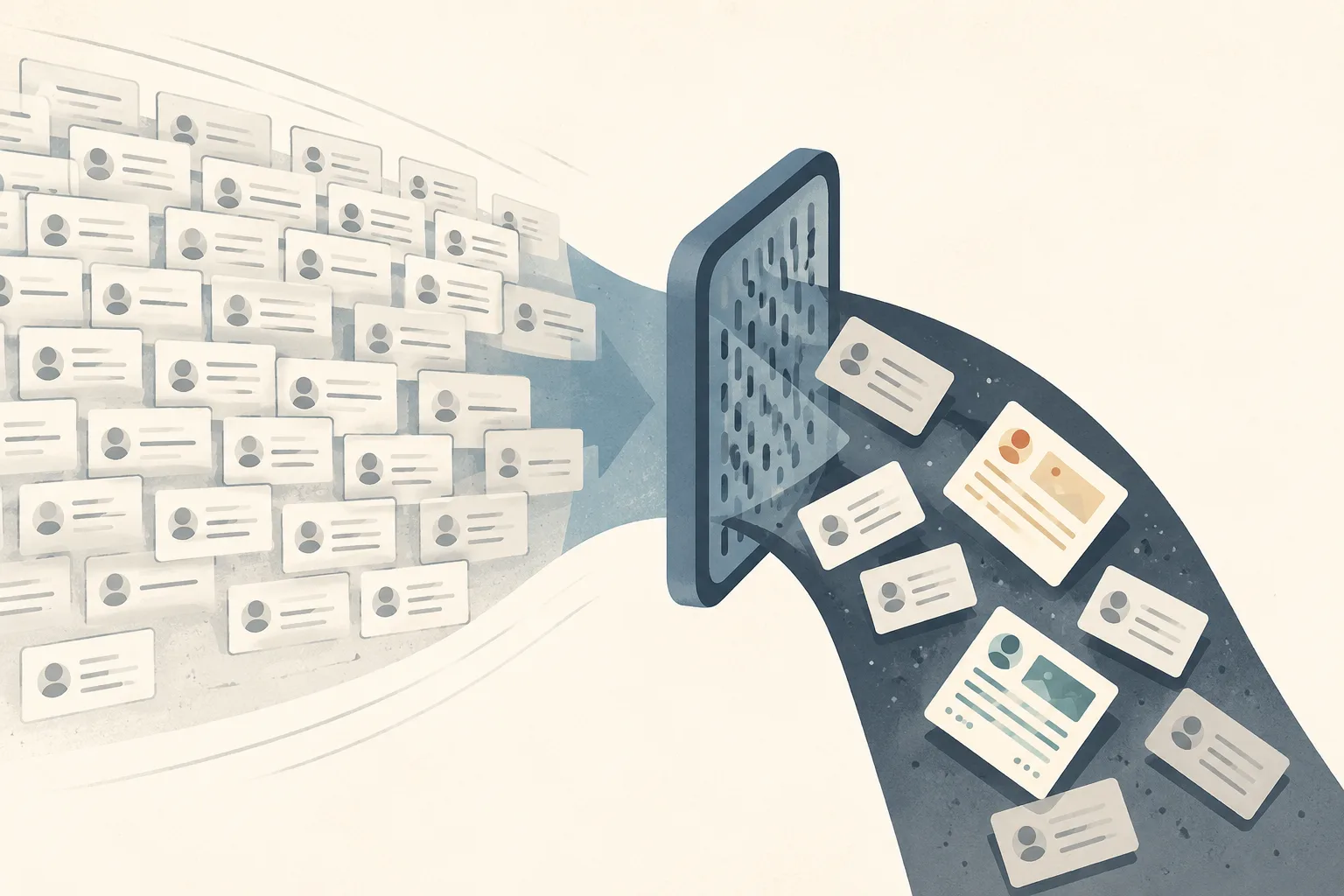
Generation became cheap, and a signal that costs nothing to produce stops being a signal. Anyone can now produce a thousand messages that reference a specific article, name a section, and explain the fit. They read exactly like the emails that worked, because they were trained on the emails that worked. The recipient cannot distinguish twenty minutes of research from twenty seconds of generation, so they stop trying. Two consequences follow.
Volume rose sharply while quality perception fell. The number of personalised-looking pitches arriving in an editor’s inbox multiplied, and the average value of each one dropped, because the cost of sending a bad one approached zero.
The rational response is to ignore everything. When you cannot tell effort from automation, the cheapest policy is to delete all of it. That policy is now widespread among the exact people worth pitching, and it catches genuine outreach as collateral. This is not a failure of technique. It is the predictable outcome when a costly signal becomes free — the signal stops working for everyone, including the people still paying for it.
Why the old templates still circulate
One reason the collapse took so long to become common knowledge: the advice never updated. Most published outreach guidance was written between roughly 2015 and 2021, when the mechanism still worked. Those articles rank well, get cited constantly, and describe a system that no longer exists. Someone starting today reads them, follows the advice precisely, sends a hundred well-crafted emails, and concludes they executed badly. They did not. They executed a tactic whose underlying economics changed after the guide was written. There is a second reason, which is that survivorship bias runs strongly here. The people still publicly recommending outreach at volume are frequently the ones with established names, where the sender’s reputation does the work the email used to do. A pitch from a recognised brand still converts. That is not evidence the tactic works — it is evidence that reputation works, which was always true and is not available to a new site. The practical test: if the reason someone replies to you is that they recognise your name, you are not running outreach. You are collecting on brand equity, and advice built on that experience does not transfer to a site that has none. The link building without email guide covers the routes available to sites in the second position.
The second-order effects
Spam filtering got more aggressive. Providers tightened bulk-sending rules substantially, and legitimate low-volume senders got caught by rules designed for high-volume abuse. A meaningful share of “no reply” is now “never delivered.”
Domain reputation became fragile. Sending patterns that were normal five years ago now damage deliverability, and recovery is slow. Sending from your primary domain carries real business risk.
The recipients built defences. Contact forms replacing published addresses, aliases that route to unread folders, and explicit no-outreach policies on write-for-us pages.
Costs rose on the sender side too. Warmed domains, verification services, sequencing tools, and deliverability monitoring are now table stakes for anyone running outreach at volume — which pushes the real cost per acquired link far above what a naive calculation suggests.
What it costs now
Worth working through, because it decides whether outreach belongs in your mix at all. Assume a modest but realistic set of numbers for a site without an established name. Send 100 emails. Some fraction never arrives. Of those delivered, a small percentage reply, and of those replies, a fraction convert to a placed link — many of the rest are asking for payment. The work: prospect research and personalisation at 15 to 20 minutes each is 25 to 33 hours for 100 emails. Add follow-ups, tooling, and the domain infrastructure. Even on optimistic assumptions, the time per acquired link runs into many hours, and the tooling cost is real. Compare that against the tactics ranked in the how to get backlinks guide and outreach sits poorly on effort-per-link for anyone who is not already established. The exception is targeted outreach. Five emails to five specific publications you genuinely want, researched properly, is a different activity with different economics. That still works.
What still works, and why
Every surviving tactic shares one property:
something other than the email carries the signal. Unlinked mentions. They already wrote about you. The prior engagement is the credential, and the ask is a thirty-second correction rather than a favour.
Existing relationships. Suppliers, clients, partners, associations. The relationship predates the request entirely.
Being referenceable. Original data, a free tool, a definitive reference page. The asset does the work and the links arrive unrequested.
Digital PR with a genuine hook. A journalist responds to newsworthiness, not to personalisation. If the story is real, the email barely matters.
Matching rather than pitching. Where both parties want the same outcome before contact, there is nothing to persuade. Posting criteria and letting qualifying publishers take the offer removes the persuasion step entirely, which the link exchange guide covers in operational detail. The pattern: none of these depend on convincing a stranger through prose.

If you are still going to run outreach
It is not dead, it is just no longer a volume tactic. Rules that keep it viable:
- Send from a separate domain. Never your primary. A close variant of your brand, warmed properly over weeks
- Verify addresses before sending. Bounce rate damages reputation quickly and permanently
- Keep volume genuinely low. Dozens per month, not hundreds. High volume is what the filters are built to catch
- Reference something a generator could not. A specific error in their piece, a data point only you have, something you both attended. Anything a model could infer from the page is worthless as a signal
- Lead with the offer. If there is no reason for them beyond your benefit, do not send it
- One follow-up. Then stop. Chasers to non-responders is how you end up blocklisted in an industry small enough for people to compare notes
- Track deliverability, not just replies. A zero reply rate might mean nothing arrived
What this means for your mix
Outreach moved from being the default link building tactic to being a specialist instrument for a handful of targets a quarter. That is the shift worth internalising. For fifteen years cold email was the engine — the thing you ran every week, the thing volume came from. It is not that any more, and no amount of technique restores it, because what broke was the signal rather than the writing. The engine slot did not disappear. It moved. If it is currently your main channel and producing little, the problem is structural rather than executional. Rewriting the template will not fix it, because the template was never what was working — the effort behind it was, and that effort is no longer legible to the recipient. The replacement is not a better email. It is a tactic where the persuasion step does not exist: mentions you already have, relationships you already hold, assets worth citing, or a marketplace where the other party arrived wanting the same thing.
That last one is what now occupies the slot cold email used to hold. It is the only replacement that runs every week without heroics, and it is the only one where output does not depend on someone else agreeing to do you a favour. Linkexchange is that model, running from inside your WordPress dashboard. You post what you want — target page, niche, minimum DR — and publishers who meet those criteria take the offer. Nobody has to be convinced, because everyone in the pool joined wanting the same thing you do. No pitch, no follow-up, no reply rate to decline. Cold email asked a stranger to act against their own interest and hoped the effort in your writing would carry it. That was always a weak offer and it is now a transparent one. A marketplace removes the ask entirely — which is why the tactic that replaced outreach is not a better version of outreach. The economics are the mirror image of everything above. Outreach costs you effort per attempt with most attempts failing. Here the effort is spent once, when you define the criteria, and the cost per placement is an outbound link slot rather than an hour of research and a message nobody opens. The internal linking tools are included free, and they are the other thing worth doing while outreach is not working. Analysis costs nothing — orphan pages, weak pages, broken internal links, authority flow, and which of your commercial pages are receiving nothing. Routing the authority you already hold needs no reply from anyone, which is a useful property in a year when nobody is replying.