AI can find prospects, qualify them, and monitor placements. It cannot make a publisher want to link to you. Here is what automation genuinely does in link building, what it made worse, and where the line sits between the two.
Every link building tool now describes itself as AI-powered, which has made the phrase useless as information. Underneath the marketing there is a real division. Some parts of link building are volume problems, and automation is genuinely good at those. Other parts are judgement problems, and automation is genuinely bad at them. The tools that work are honest about which is which.
The three jobs, and which ones automate
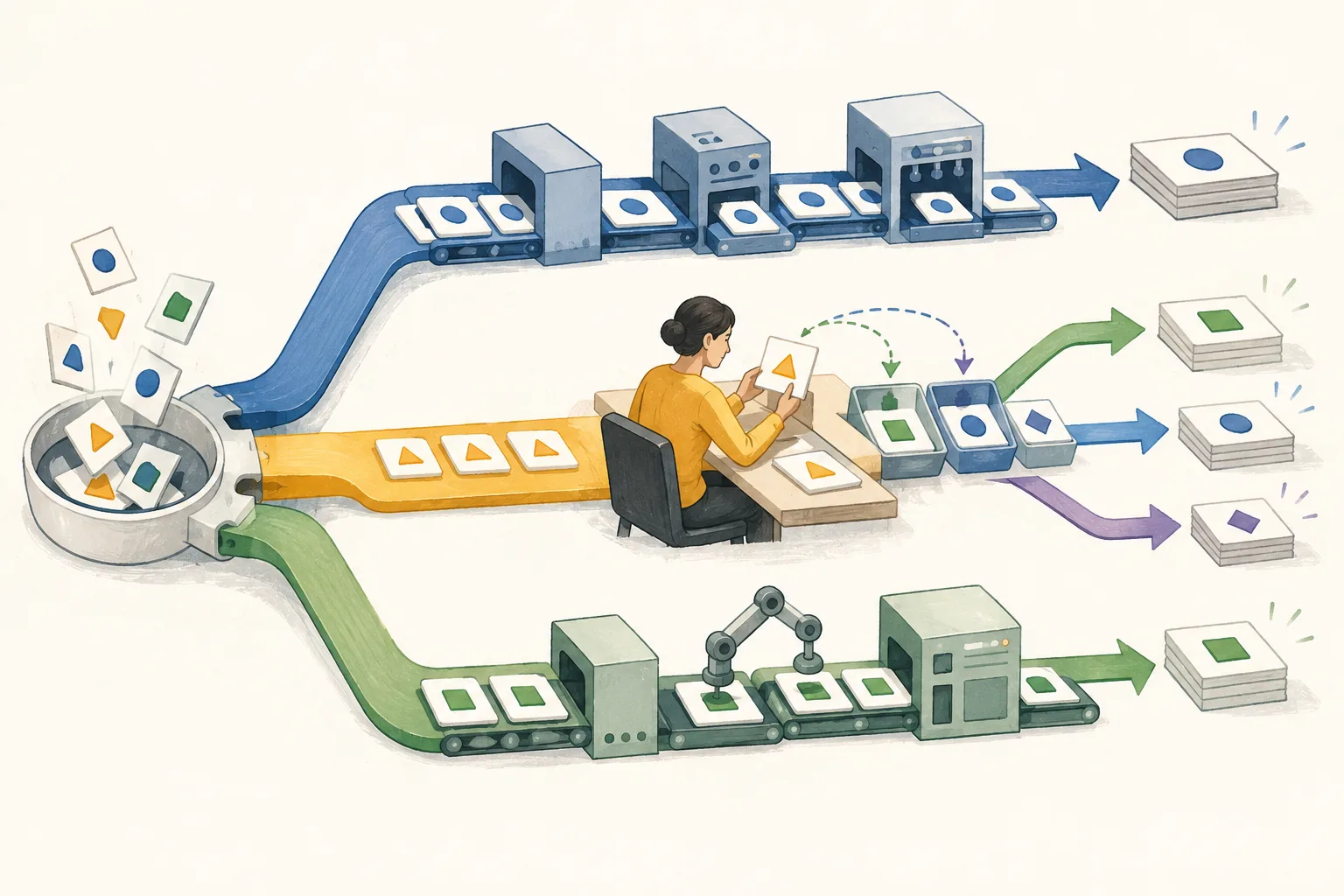
Strip link building to its components and there are three.
Discovery. Finding sites relevant to yours that might plausibly link. A search problem across a very large space.
Qualification. Deciding whether a given site is worth a link from — authority, traffic, outbound profile, whether the content is real. An evaluation problem with several measurable inputs and one unmeasurable one.
Agreement. Getting both sides to actually do it. A coordination problem, or a persuasion problem depending on the tactic. Discovery automates well. Qualification automates partially. Agreement automates only when the persuasion element is removed, which is a structural change rather than a technical one.
Where automation genuinely helps
Prospecting at scale. Scanning thousands of candidate sites against criteria is exactly the work software should do. A human evaluating 2,000 domains manually is a week of tedium with declining accuracy toward the end. This is the clearest win and it is not close.
Semantic relevance rather than category tags. Crude matching sorts sites into buckets — marketing, finance, health — and pairs within the bucket. That is too blunt: a site about email deliverability and one about CRM software are both “marketing” and only loosely related. Modern language models can assess what content is actually about rather than what label it carries, which is a real improvement over keyword or category matching.
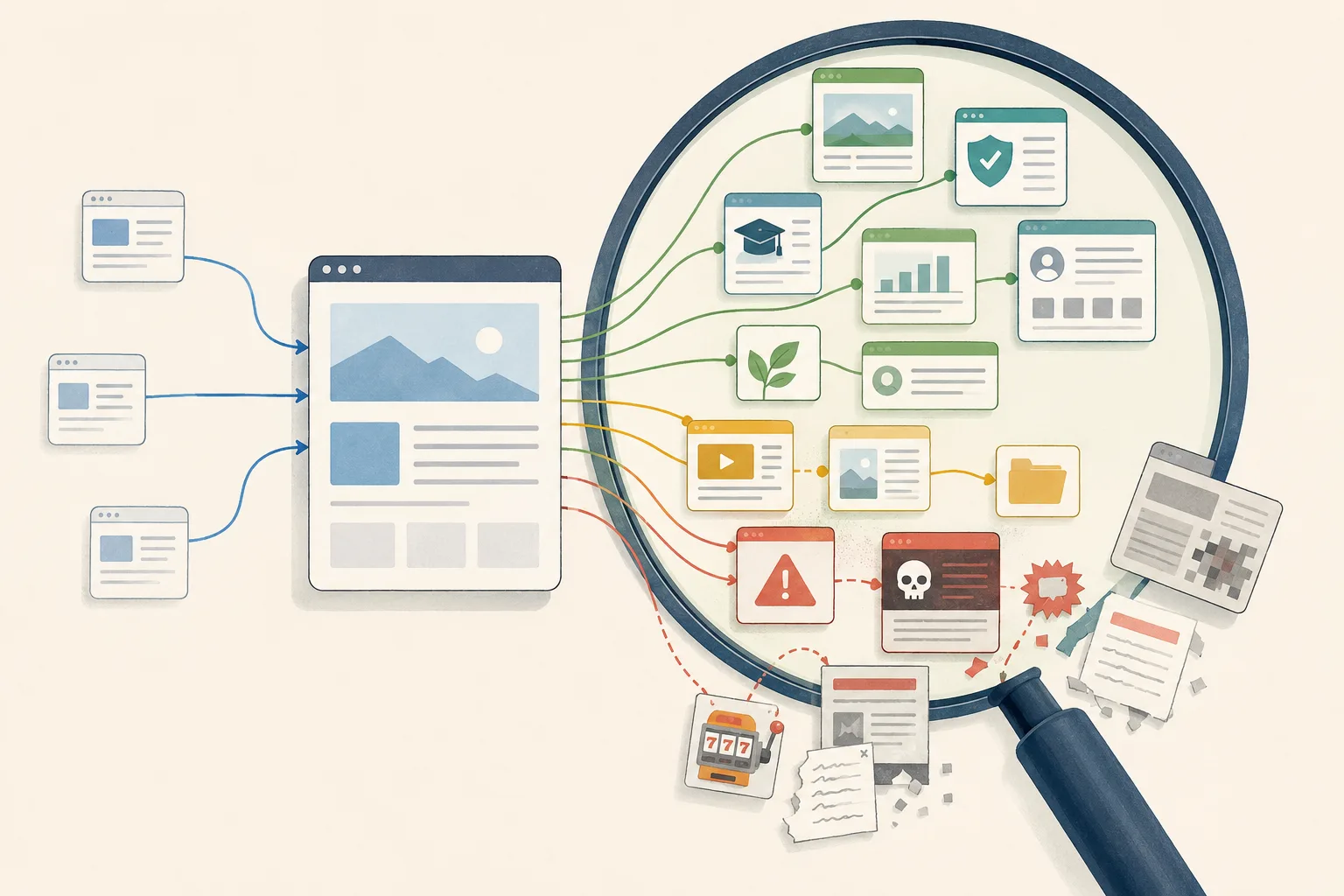
Anomaly detection in outbound profiles. Spotting that a site links out to 600 unrelated commercial domains, or that its recent outbound additions cluster in gambling and pharma, is pattern work at scale. Continuous monitoring. Checking whether every link you built is still live, forever, is the purest automation case in the entire discipline. No human does this reliably, which is why link rot is the default outcome for programmes without it — and why the link exchange guide treats monitoring as part of the cost of a link rather than an optional extra.
Anchor and velocity tracking. Watching distribution across target URLs and flagging drift is counting, and counting scales.
Where it does not
Judging whether content is genuinely useful. A model can confirm a page has 1,800 words, headings, and topical coverage. It cannot reliably tell you whether a person wrote it because they had something to say. That distinction is now the single most important quality signal, and it is the one automation reads worst.
Brand association. Whether you want your company mentioned next to this publisher is a business judgement involving reputation, audience, and context that no metric captures.
Editorial fit. Whether a link genuinely belongs in a specific paragraph of a specific article requires reading both, in context, with an understanding of what each is for.
Making someone want to link to you. This is the ceiling. Every automation in this space narrows a field or manages a process. None of them create the reason a publisher would say yes.
What AI actively made worse
Worth stating plainly, because the industry mostly does not.
Cold outreach broke. A personalised email used to signal effort — twenty minutes of research per prospect meant a hundred emails cost days, so anyone sending them had selected carefully. Once generation became cheap, a thousand personalised-looking messages cost nothing, and the signal stopped carrying information. Recipients cannot distinguish research from generation, so the rational policy became ignoring everything. The AI link building guide covers what replaced it.
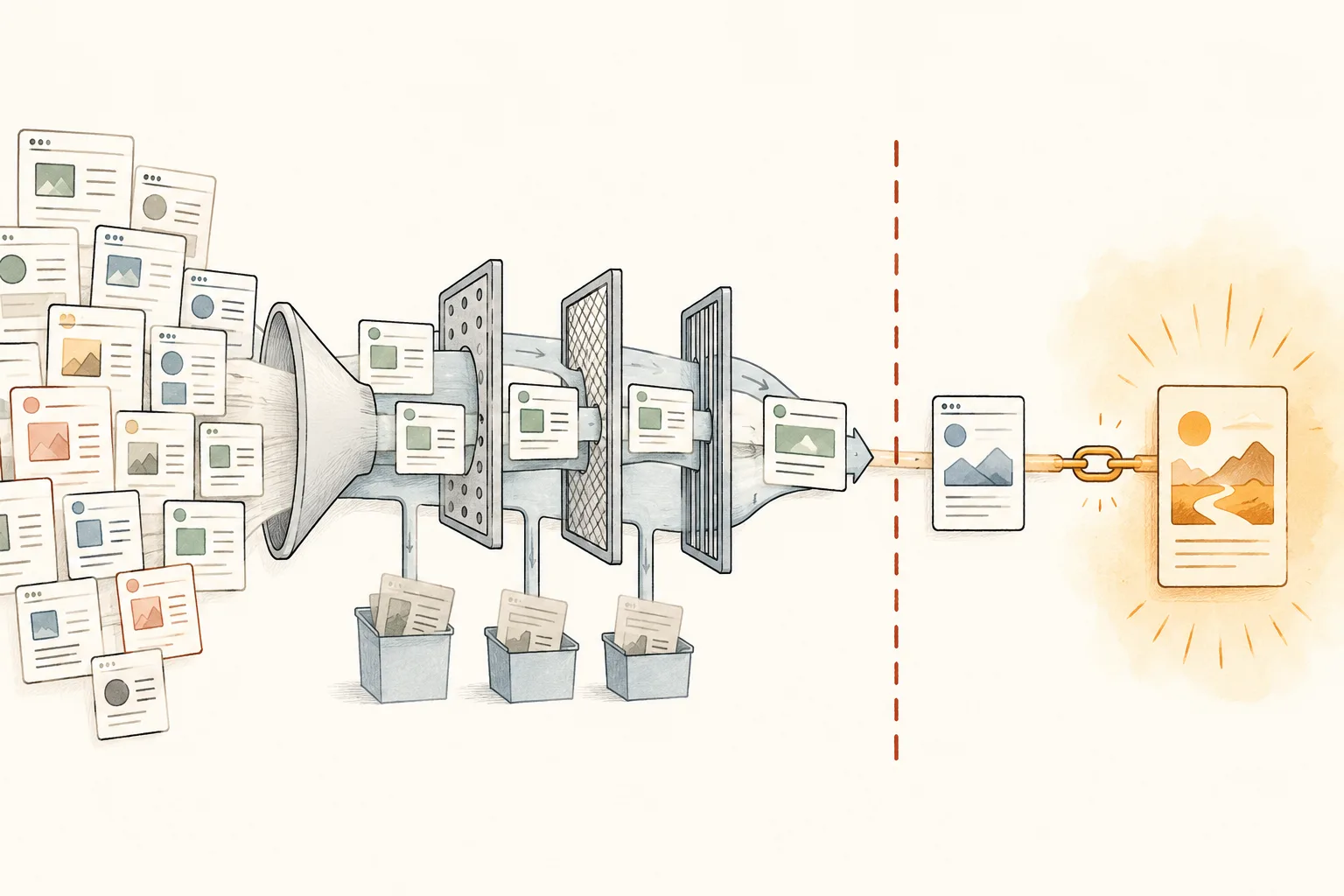
Partner vetting got harder. The web filled with sites publishing volume content that reads plausibly and means nothing. A DR 35 site posting forty generated articles a month is a worse link than its metrics suggest, and the metrics will not tell you. This raises the value of the one check automation cannot do.
Scaled content abuse became a named policy violation. Google’s spam policies address mass-produced content created primarily to manipulate rankings, without regard to how it was produced. Automation that generates pages at volume for link purposes sits directly against that.
What this means for which tactics you run
The automation split changes the ranking of tactics, not just how you execute them. Tactics whose cost was mostly administrative got cheaper. Prospecting-heavy approaches — resource pages, competitor gap analysis, partner matching — benefit directly, because the expensive part was always the list building. Tactics whose cost was mostly persuasion got more expensive, in real terms. Cold outreach now needs warmed domains, verification, and deliverability monitoring to achieve worse results than it did with none of that five years ago. And tactics that never involved persuasion are unaffected, which makes them relatively stronger without having improved at all. Unlinked mentions, existing relationships, and being genuinely referenceable work the same way they always did. The practical read: if your mix was built around outreach volume, the economics moved underneath you. The how to get backlinks guide ranks all eleven tactics on effort, return, risk, and scalability, and the ordering has shifted.
The division that actually works
The productive split is narrow and specific:
software reduces thousands of possibilities to a shortlist, and a human decides on the shortlist. That is not a compromise position. It reflects where each is genuinely better. Software will out-perform you on scanning 2,000 domains for DR, traffic, outbound anomalies, and topical proximity. You will out-perform any model on reading two articles and deciding whether the site is real. The five-minute partner audit is the human half, and it does not get shorter because a tool surfaced the candidate. If anything the shortlist makes the review more worthwhile, because you are spending judgement on candidates that already passed the numbers. Anyone selling you automation that removes the second step is describing a product rather than a process.
What to ask before trusting a tool with your link profile
Six questions. The answers tell you more than any feature list.
- Does matching use semantic relevance or category tags? Ask for the distinction explicitly. Category matching is cheap to build and produces links that make no sense to a reader
- Does it evaluate outbound profiles, or only inbound authority? The neighbourhood a site keeps is more predictive than its DR, and most tools ignore it entirely
- Does it check traffic separately from DR? Authority without audience is half an asset, and the two diverge constantly on rebuilt expired domains
- Does it monitor placements after they go live? Acquisition without monitoring produces a referring domain count that decays invisibly
- Does it pace placements, or deliver in batches? Timing clusters are a footprint, and batch delivery creates them by default
- Can I review before anything is committed? If the answer is no, the tool is making brand decisions on your behalf
The one part automation genuinely solves outright
There is a corner of this where the human judgement requirement mostly disappears, and it is not the external side. Internal linking is a closed system. Every page is yours, you know what each one is about, and the question of whether two pages should link to each other is answerable from content alone — no reputation assessment, no brand risk, no publisher to evaluate. The reason it does not get done is purely that holding a mental map of two hundred pages is beyond most people, not that the decisions are hard. Linkexchange is built on exactly that distinction, and it runs both halves.
The internal half, where automation genuinely solves it. The free internal linking tools read across your existing articles and recommend connections between genuinely related pages — plus orphan discovery, weak pages, dead ends, coverage, broken internal links and 404s, authority flow, money pages, content gaps, and cluster analysis. Bulk fix commits the repairs and the new connections in one click on the paid tier. This is the case where automation removes the work rather than narrowing it, because the judgement it would otherwise need is judgement you already made by publishing the pages.
The external half, where the split holds. Semantic matching against criteria you set — niche and adjacency, DR floor, minimum traffic — narrows thousands of publishers to the ones worth your five minutes. Placements are monitored afterwards so a removed link surfaces immediately rather than at an audit next year. What it does not do is decide for you: you approve before anything is committed, which is the sixth question on the list above and the one most tools fail. That is the whole design. Automation where the answer is computable, human judgement where it is not, and no pretence that the second category is smaller than it is.
The thing that did not change
Worth ending on, because every automation claim in this space quietly assumes otherwise. The fundamentals that decide whether a link is worth having are unaffected by how it was found. Relevance to your niche or an adjacent one. Placement inside genuine content rather than a resources block. A moderate pace that looks like a site being gradually discovered. Partners with real traffic and clean outbound profiles. Automation makes those rules easier to follow consistently — it will not forget your DR floor at 11pm, and it will not talk itself into a borderline match because the pipeline looked thin that week. That consistency is a genuine benefit and it is undersold relative to the speed claims. What automation does not do is repeal any of it. A tool executing bad thresholds efficiently produces bad links faster, which is worse than no tool, because the volume makes the pattern more legible rather than less.
The short answer
AI cannot build backlinks for you. It can find candidates, sort them, watch them, and remove the administrative work around them — which is most of the hours and none of the decisions. The reason a publisher links to you is still that your page is worth linking to. No amount of automation upstream of that changes it, and the tools worth using are the ones that say so.