

You already have a list of organisations that would link to you for the asking. It is your contacts, your suppliers, your clients, and the associations you pay to belong to. Almost nobody works through it, which makes it the cheapest link building available.
Every link building tactic in the standard playbook starts with strangers. Find prospects, qualify them, persuade them. Meanwhile most businesses have thirty to fifty organisations they already have a commercial or professional relationship with, a large share of which maintain a partners page, a client list, a member directory, or a supplier index. Those links require no persuasion, no content, and no budget. They also require someone to sit down for an afternoon and go through a list, which is apparently a higher barrier than it sounds, because this is the most consistently skipped tactic in link building.
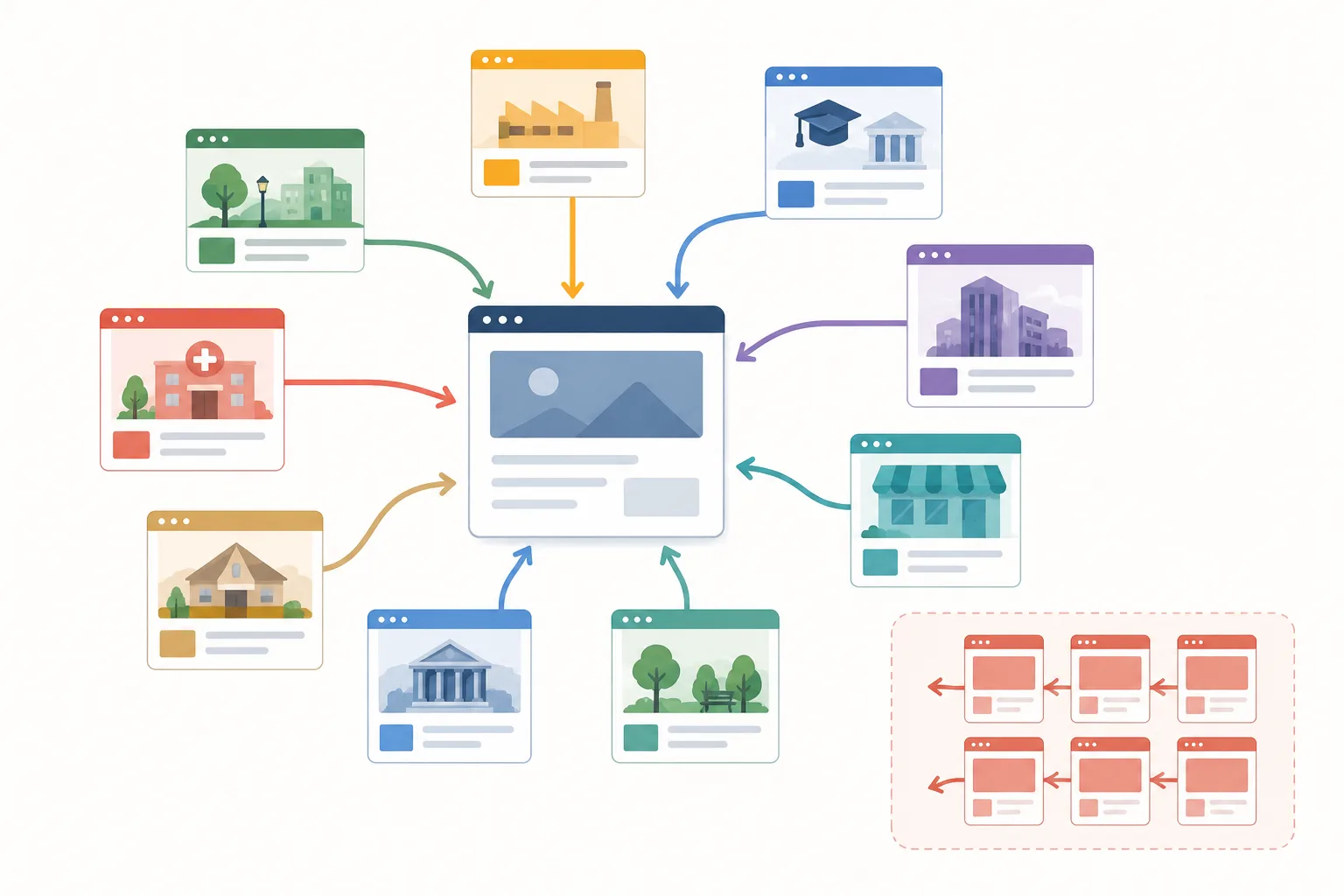
Who is actually on your list
Most people underestimate this by half because they think of it too narrowly. Work through each category properly.
- Suppliers and vendors. Anyone you buy from. Many maintain stockist lists, client showcases, or case study programmes and are actively looking for participants
- Clients and customers. Particularly B2B. If they credit their vendors anywhere, you belong there
- Software and tools you use. Integration directories, customer stories, review programmes. If a tool is central to how you work, its marketing team wants that testimonial
- Trade associations and professional bodies. Member directories are usually a benefit you are already paying for and frequently have not claimed
- Chambers of commerce and local business groups. Unglamorous, genuinely local, and often surprisingly well-linked
- Certifications and accreditations. Anything you hold that has a register of holders
- Your accountant, lawyer, agency, and the firm that built your site. All maintain client lists
- Partners and integrations. Anyone you have a formal arrangement with
- Sponsorships. Events, local teams, community groups, conferences. Sponsor pages link out by design
- Alumni networks and universities. Founder alumni profiles, guest lecture credits, careers pages
- Events you have spoken at. Speaker bios persist for years
- Communities and forums you genuinely participate in. Member profiles and contributor pages
Two hours with your bank statements, your CRM, and your inbox will surface more than any prospecting tool would, because these relationships are invisible to external tools by design. Before spending anything on acquiring new links, it is worth knowing whether the ones you already hold are reaching the right pages — the website traffic stopped growing guide covers that diagnostic.
Why these links are better than they look
They get dismissed as low value, and that is usually wrong.
Relevance is automatic. Your supplier is in your industry. Your trade association is your niche by definition. Relevance is the variable the placement market barely prices and these give it to you free.
They are genuinely editorial. Nobody arranged them for SEO purposes. They exist because a real commercial relationship exists, which is exactly the pattern that survives scrutiny.
They are durable. A supplier’s stockist page is not pruned in next year’s content cleanup. These outlast most links you will build by other means.
They send referral traffic. A member directory or a stockist list is used by people looking for exactly what you do. The visitors are pre-qualified in a way blog links rarely are.
They are diverse. Local, industry, educational, and commercial domains — a mix that looks like a real business rather than a link building campaign. That variety is worth more than it appears, since a profile of thirty links all from the same kind of source is its own pattern, as the link exchange guide covers.
How to ask
The ask barely qualifies as outreach, and treating it like outreach makes it worse. You are contacting someone who knows you, usually about something they already do.
Hi [name], Quick one — I noticed you have a [clients / partners / stockists] page. Happy to be listed if that is something you are still adding to. [Company], [one-line description], [URL]. And if it is easier, I am glad to write something for [their case study programme / testimonial page] as well. Thanks, [name]
What makes it land:
- Reference the specific page. Shows you checked, and tells them exactly what you mean
- Offer something back. A testimonial or case study participation is genuinely useful to them, costs you twenty minutes, and turns a request into a trade
- Give the details pre-formatted. Name, description, URL. No follow-up needed to collect information
- Keep it in the existing channel. Reply to a thread you already have with your account manager rather than emailing a generic address. Massively higher response
The highest-value version of this ask
Case studies and testimonials are the strongest move available here, and they are underused because people assume the vendor has to initiate. Vendors need customer proof constantly. Offering to be a case study subject is doing them a favour, and case study pages are typically comprehensive, prominently linked, and permanent — a considerably better placement than a name in a directory list. The same applies to testimonials, integration stories, and any “how our customers use this” programme. Ask your account manager whether one exists. Most do, most are underfed, and the answer is rarely no.
The realistic numbers
Start with 40 organisations across the categories above.
Those with a page that lists partners, clients, members, or stockists: perhaps 20.
Where you are not already listed: perhaps 15. Check first — a share of these already link to you and nobody noticed.
Conversion on the ask: high. These are not cold pitches. Half or better is a reasonable expectation, and refusals are usually policy rather than judgement. That is a realistic seven to ten new referring domains from one afternoon and a handful of emails. For a site with fewer than a hundred referring domains, that is a material change to the profile — and every one of them is relevant, editorial, and durable. Compare it against the eight hours per link that guest posting costs, or the day of filtering that broken link building requires before you send anything, and the ordering in the how to get backlinks ranking becomes obvious: do this first, always.
The check to run before you ask anyone
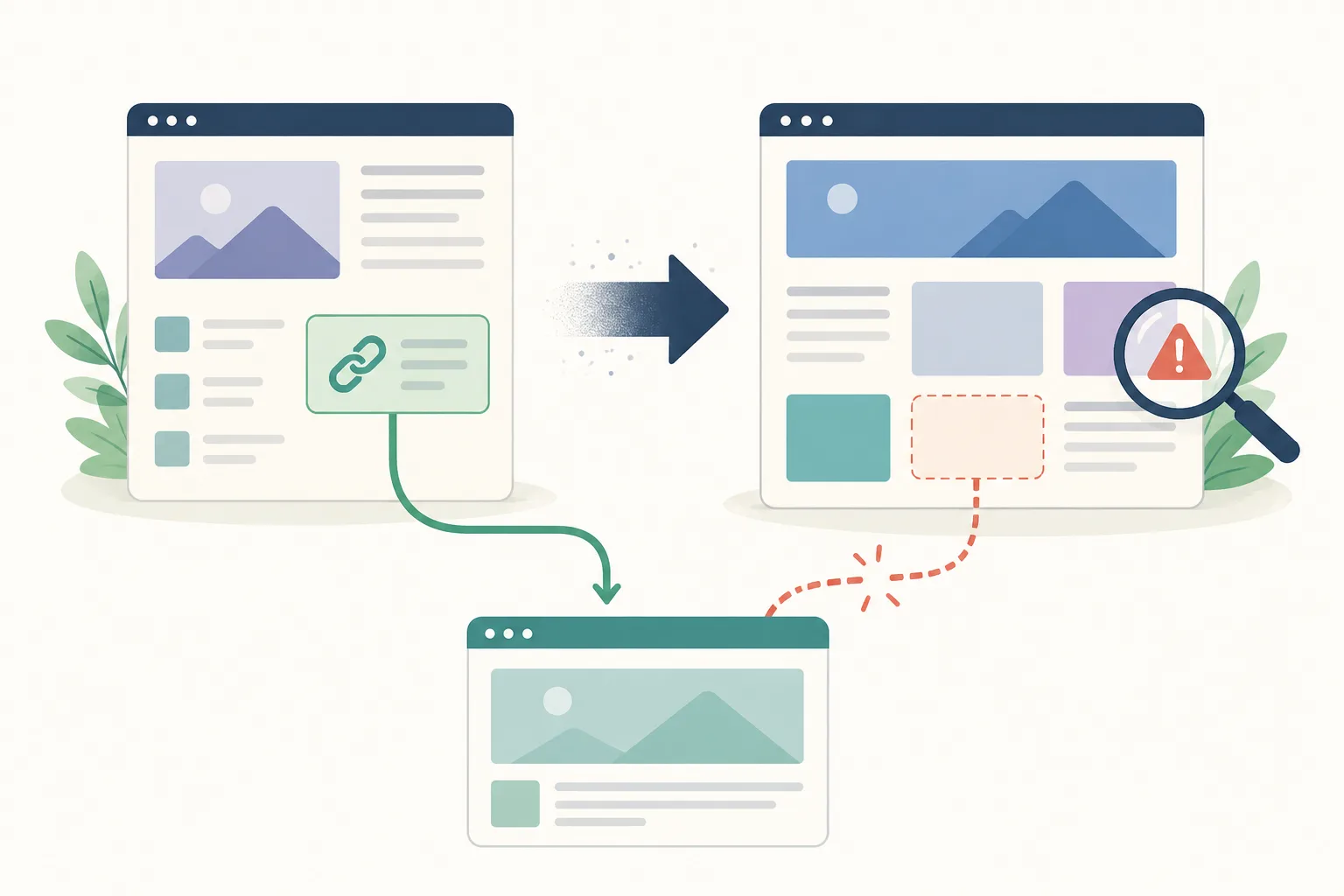
Some of these organisations already link to you. Pull your referring domain list from Search Console or Ahrefs Webmaster Tools and cross-reference it against your contact list before sending anything. Two reasons this matters: asking to be added somewhere you already appear is a small but avoidable embarrassment, and finding existing links you did not know about is common and useful. It also occasionally surfaces the opposite problem — a link that used to exist and has since disappeared through a redesign. That is a different and easier conversation, because you are reporting something broken rather than requesting a favour.
A worked sweep
A 40-person B2B services firm, six years old, running this properly for the first time.
The list, assembled from bank statements, CRM, and the inbox: 47 organisations.
Cross-referenced against existing referring domains first: 9 already linked. Four of those were unknown to the marketing team, including one from a supplier’s case study page that had been live for two years and was sending steady referral traffic nobody had attributed.
Organisations with a relevant page and no existing link: 16.
Sorted by ease:
- 3 trade association directories — membership already paid, listing simply never claimed. Completed via a form, no email needed. Live within a week
- 5 supplier and vendor pages — asked through existing account managers rather than generic addresses. Four agreed
- 4 software vendors with customer story programmes. Two accepted the offer to be a case study subject, which produced full pages rather than directory entries
- 2 sponsorships — a local event and a community group, both with sponsor pages the firm had never checked
- 1 university — a founder’s alumni profile, updated on request
- 1 declined on policy grounds
Result: 12 new referring domains from about five hours of work, spread across association, commercial, local, and educational domains. The two case study pages were worth more than the other ten combined — comprehensive, prominently linked from the vendor’s own navigation, and permanent. That is the pattern to notice: the highest-value outcome came from offering something rather than asking for something.
What not to do
Do not offer to pay. It converts a relationship link into a paid placement, which changes what it is and what it is worth.
Do not ask for specific anchor text. These links should read naturally, and requesting exact-match commercial anchors from your accountant is a request nobody should make.
Do not chase. One ask. These are people you have ongoing relationships with, and a second email about a directory listing is not worth the friction.
Do not manufacture relationships. Joining eleven associations for their member directories is a link scheme with a membership fee, and the directories that accept anyone are worth nothing anyway.
Do not stop at the ask. Log what you sent and check whether the link appeared. Agreements do not always turn into placements, and nobody will tell you.
What to do once the easy links are gone
The obvious limitation: this list is finite. You have as many relationships as you have, and once they are converted the tactic is exhausted. That is fine — it was never an engine. It is the cheapest starting position available, and it gets you to a base where other tactics work better, because a site with thirty relevant referring domains is a considerably more appealing partner than a site with four. What comes next needs to be something where effort does not scale linearly with links, which is a short list — and this article is the argument for why. You have just spent an afternoon and produced ten or twelve referring domains. That worked because the relationships already existed. Next month there are no new suppliers, no new associations, and no new sponsorships, so the same afternoon produces nothing. Linkexchange fills that slot from inside your WordPress dashboard. You post the target page, niche and minimum DR, and publishers meeting those criteria take the offer. The work happens once when you set the criteria rather than once per link, which is the property this tactic lacks and the reason it cannot carry a year. The base you just built is what makes it work, incidentally. A site with thirty relevant referring domains gets taken up on offers that a site with four does not.
There is also a move worth making with the list you have just assembled. The organisations on it are, by definition, relevant to your industry, run real sites, and already have a working relationship with you. That is the exact profile of a good exchange partner — the thing everyone else is hunting strangers for, sitting in your CRM. A directory listing is a single transaction. If those same partners are on the platform, the relationship keeps producing: they need links too, their criteria are visible alongside yours, and the next placement does not require another email to an account manager who has already done you one favour. It also solves the specific problem this article ends on. The list is finite, but the relationships are not — a supplier you got one stockist listing from can be a partner you trade with for years, and that conversion costs one sentence in an email you were already sending. Worth adding to the ask above: mention it when you make the original request, not afterwards. You are already talking to them about links, and it is a considerably easier conversation than starting a new one in six months.
Two things worth doing at the same time. Monitoring. The article says above not to stop at the ask, because agreements do not always become placements and nobody tells you. The same applies afterwards — a supplier redesigns their site, the stockist page changes, and the link you earned quietly stops existing. Placements are monitored continuously, so a removal surfaces when it happens.
Routing what arrived. Twelve new referring domains landing on your homepage and an about page is authority arriving somewhere it cannot help. The free internal linking tools show where earned links land, where the flow stops, and which of your commercial pages are receiving nothing — plus orphan pages, weak pages, broken internal links and 404s, content gaps, and cluster analysis. That second one is the difference between twelve links and twelve links that did something.