
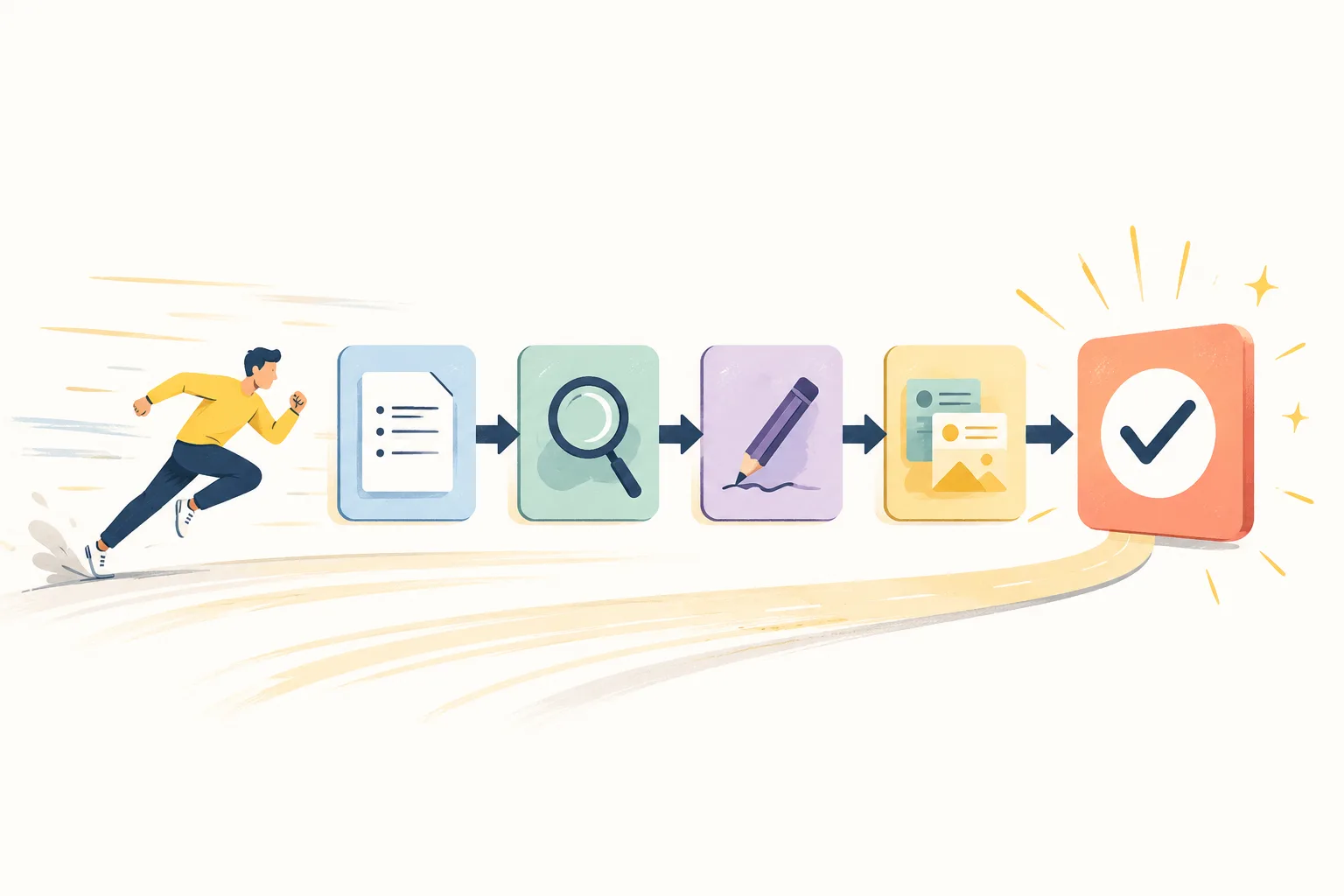
Someone offers you a link. You have five minutes to decide whether it is worth having. Here is the order to check things in, what each check rules out, and the two signals that override every metric on the page.
Most bad links are not acquired through bad luck. They are acquired because nobody looked properly before saying yes. The checks below take about five minutes once you know the order, and the order matters — each one is designed to eliminate candidates cheaply so you never spend time on the expensive checks for a site that fails an obvious test. Run them before you commit anything, not after the link is live. Which tactics even let you apply them varies — the how to get backlinks ranking notes where you get to vet a partner and where you take what arrives.
The five-minute sequence
Minute one — does the site look real? Open it. Read two articles, not the homepage. You are looking for evidence a person wrote for a reason. Does the writing have a point of view? Do the articles cover a coherent subject, or does the site range across insurance, crypto, dog training, and CBD? Are there author names attached to real people? This single check eliminates more bad partners than every metric combined, and no tool substitutes for it. A site publishing forty generated articles a month is a worse link than its numbers suggest, and the numbers will not tell you.
Minute two — is there an audience? Check estimated organic traffic in any backlink or analytics tool. A free-tier lookup is enough for a yes-or-no answer. Authority without audience is half an asset. Traffic is also the hardest metric to fake, which makes it the best single proxy for whether a site is genuinely operating. A site with DR 50 and 200 monthly visitors is telling you something — usually that the profile is old, bought, or rebuilt from an expired domain.
Minute three — check the outbound profile. This is the check almost everyone skips and it is the most predictive one. Every backlink tool reports outbound linked domains. You want to see a modest number of relevant destinations. What you do not want is several hundred unrelated commercial domains, or a cluster pointing at gambling, pharma, loans, and adult sites. A site linking out to everyone is selling placements, whatever it says. Your link lands on a page that gets worse every month they keep selling, and when the network is identified, everything on it drops together. The link exchange guide covers why a DR floor without an outbound check screens for the wrong thing entirely.
Minute four — check the actual page. The link sits on a page, not on a domain. A DR 65 site can host your link on a brand-new post with no inbound links and no traffic, and you will have bought the domain’s reputation and none of its power. Check URL Rating or page-level metrics on the specific URL. Is it indexed? A quick `site:` search settles it. Does it already rank for anything? A page that has been ranking for two years is worth several times a page published this week.
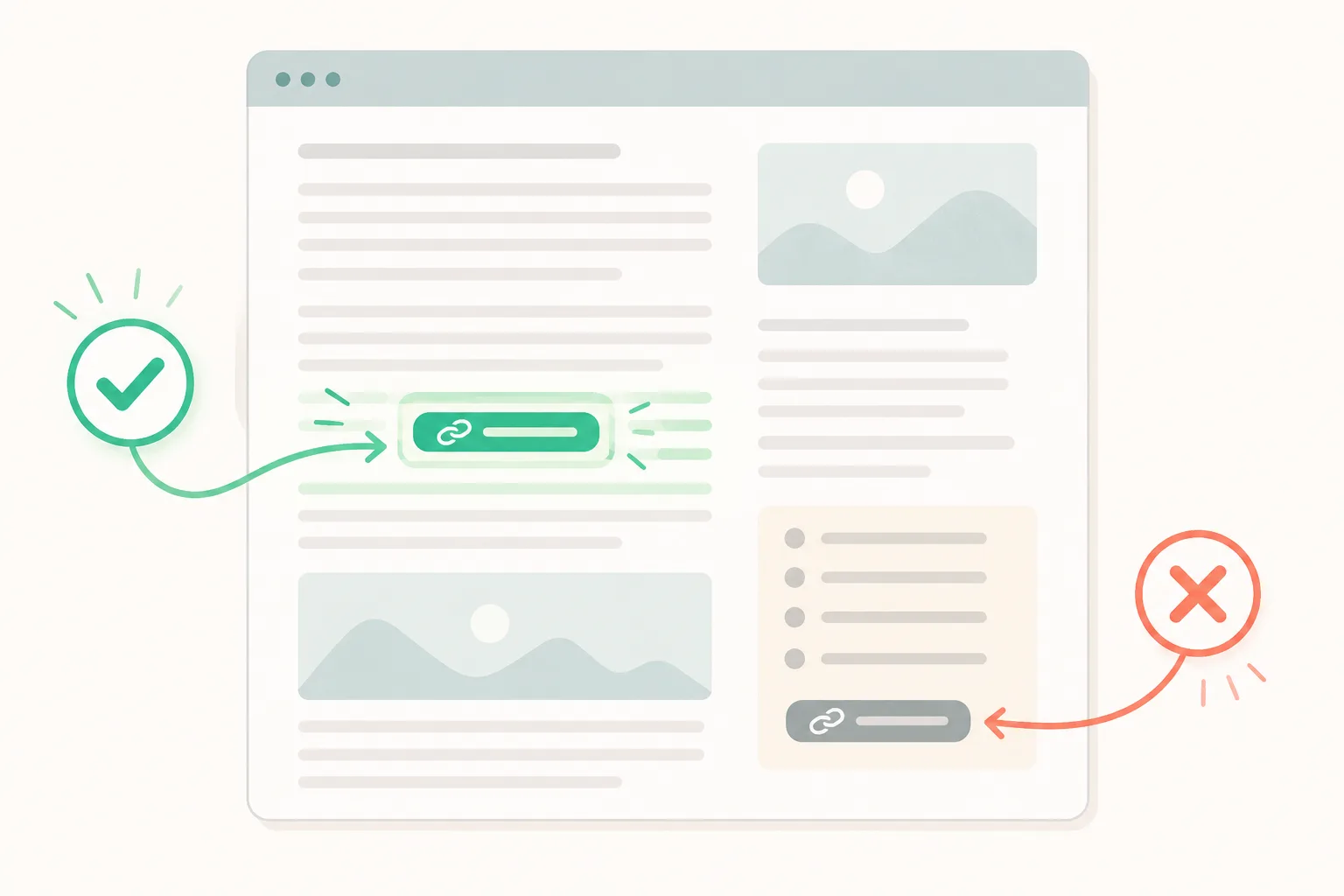
Minute five — check the terms. Will the link be do-follow and in body content? Ask directly; vagueness here is informative. Where exactly on the page? A link in a “related resources” block at the end is worth a fraction of one in the body with surrounding text that justifies it.
The two signals that override everything
If either of these is present, stop regardless of how good the metrics look.
Topical incoherence. If a link from this site to yours would make no sense to a reader, the metrics are irrelevant. A DR 70 site in an unrelated industry is a strong link from the wrong place, and relevance is not something authority compensates for.
A visible placement business. Write-for-us pages listing prices, “sponsored post” categories, or an outbound profile spanning every high-margin vertical. These sites are selling to everyone, and the asset you are buying into degrades continuously.
The tools, and what each one answers
- An SEO browser toolbar — authority metrics inline as you browse. The highest-leverage free install for this workflow, because it answers the metric questions without leaving the page you are already evaluating
- A free backlink checker — the major tools all offer limited daily lookups. Enough for spot checks
- A traffic estimator — free tiers give you the yes-or-no answer you need on audience
- A
site:search — indexation, and roughly how many pages the site has. Free and instant - Wayback Machine — what the domain used to be. Essential for the expired-domain check below
- Right-click → Inspect — the rel attribute on any existing link, so you can see whether this publisher nofollows everything
Four extra checks when more is at stake
For a placement you are paying for, or a partner you expect to work with repeatedly, add these.
Domain history. Run the domain through the Wayback Machine. A site that was a hotel booking portal in 2019 and a marketing blog now is a rebuilt expired domain — the authority is inherited from something unrelated and is often being monetised aggressively.
Indexation ratio. Compare a `site:` count against the site’s apparent size. A site with 4,000 pages and 200 indexed has a quality problem Google has already noticed.
Link velocity on their side. If their referring domains jumped sharply in a short window, they are buying too, and the profile you are joining may not survive scrutiny.
Who else they link to recently. Sort outgoing links by first-seen date. Recent additions tell you what the site is doing now, which matters more than its historical profile.
A worked comparison
Two offers to the same DR 28 site.
Offer A. DR 61. Estimated traffic 900/month. Outbound linked domains: 740, spanning insurance, crypto, casinos, and supplements. Your link would go on a post published last week. Write-for-us page lists pricing.
Offer B. DR 33. Estimated traffic 11,000/month. Outbound linked domains: 68, all topically adjacent. Your link would sit in a guide that has ranked for eighteen months and holds 19 referring domains of its own. Offer A has the better headline number by 28 points and fails on four of the five checks: no audience, a compromised outbound profile, a page with no authority, and a visible placement business. Offer B is worth several times more, and the whole assessment takes five minutes. This is the pattern behind most wasted link budgets — filtering on DR alone selects for exactly the sites that have optimised for DR alone. The niche matching backlinks guide covers why automated matching narrows the field but does not replace this review.
What a failed check actually means
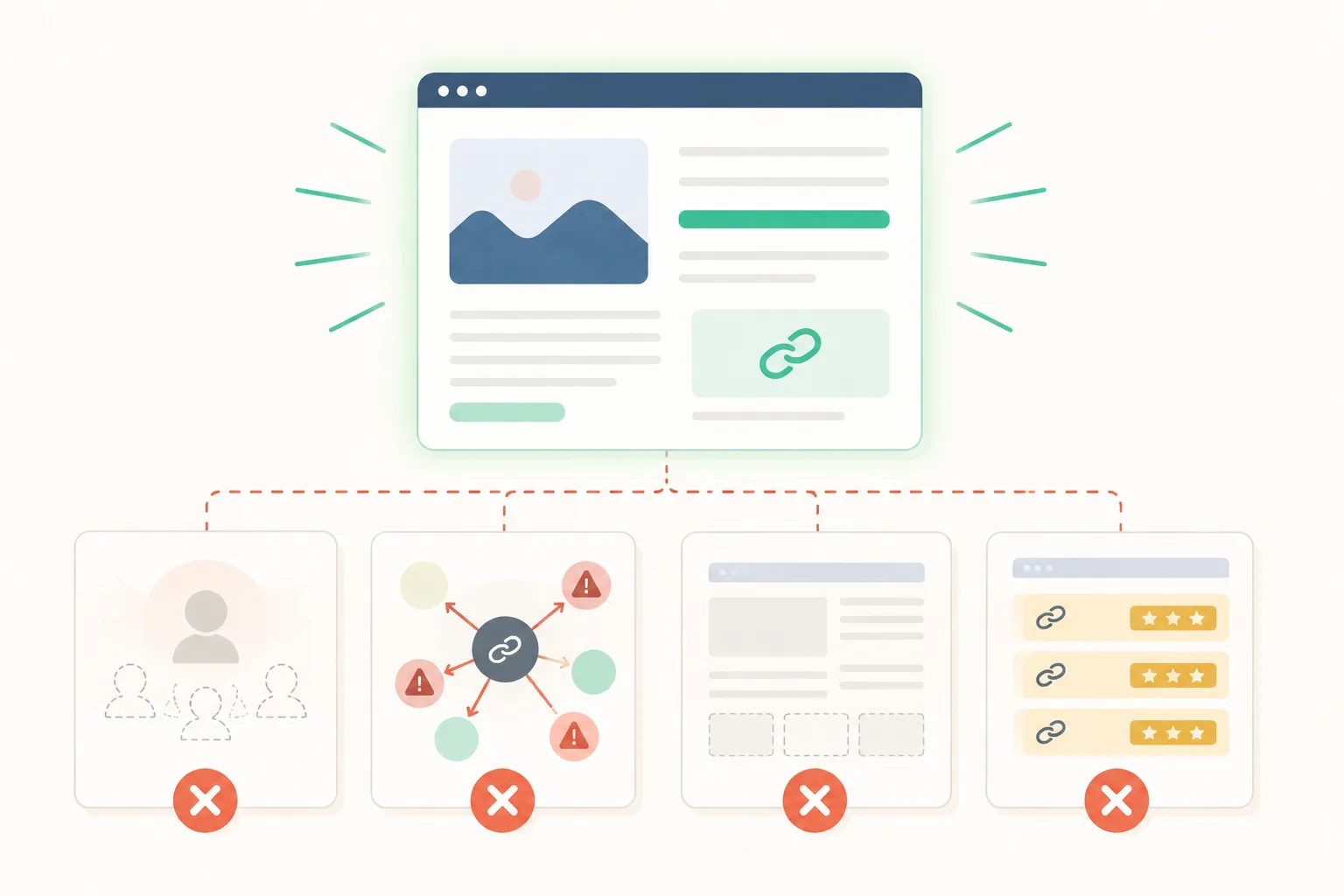
Not every failure is disqualifying, and treating them all as fatal leaves you with an empty pipeline.
Low traffic, everything else clean. Sometimes a genuinely good site is simply new or in a small niche. Ask when it launched and look at whether the content is improving. A real site three months old is a reasonable bet; a two-year-old site with no traffic is not.
Higher outbound count, but all relevant. A resource-heavy publication that links out constantly to sources is not a link seller. What matters is the composition, not the count. Two hundred outbound domains all in one industry is a librarian. Two hundred spanning six unrelated verticals is a shop.
Page has no authority yet, site is strong. Negotiate placement rather than declining. Ask for an existing article instead of a new one — that request is normal and the answer tells you how the site operates.
Nofollow by policy. Some legitimate publishers nofollow all outbound links. The link will still send referral traffic and still count as a brand mention. Whether it is worth what you are giving in return is a different question, and usually the answer is no for an exchange.
Topical incoherence. The one that stays fatal. There is no version of this you negotiate around.
What automation can and cannot do here
Worth being precise about the division of labour, because the industry oversells one half of it.
Software is good at the volume work. Scanning thousands of candidates, pulling metrics, flagging outbound anomalies, checking indexation, and monitoring placements after they go live so a removal surfaces immediately rather than at your next audit.
Software is poor at the judgement work. Whether an article is genuinely useful or merely present. Whether a publisher is someone you want your brand next to. Whether the writing reads like someone meant it. The right split is that a system narrows thousands of possibilities to a shortlist, and you spend your five minutes on the shortlist. Anyone telling you to skip the second step is describing a product rather than a process. Linkexchange is built on that split, and it covers both sides of it.
On the partner side, you set the criteria — niche and adjacency band, DR floor, minimum traffic — and matching narrows the field to publishers who already meet them. The five minutes then goes on candidates worth five minutes rather than on the first ten sites in a spreadsheet. Placements are monitored afterwards, which covers the check nobody repeats: whether the link is still live six months later.
On your side, and this is the half people forget: every check in this article is one a partner runs on you. Minute three is your outbound profile. If you have been placing exchange links for a year, that profile has been growing without anyone looking at it, and it is the first thing an experienced publisher checks before agreeing to anything. Minute four is whether your pages are worth linking to. Both are visible to everyone except you. The free internal linking tools cover exactly that ground. Broken internal links and 404s across your site, found and repaired — bulk fix commits every repair in one click on the paid tier rather than opening each post. Your outbound linked domains, so you can see whether the count is drifting toward what you would reject in a partner. Orphan pages, weak pages, dead ends, authority flow, and which of your commercial pages are actually receiving anything. A site full of broken links and starved money pages fails its own five-minute audit. Running it on yourself first is the cheapest thing on this page.
What none of it does is minute one. Reading two articles and deciding whether a person wrote them for a reason is judgement, and it stays yours. Automation buys you the shortlist. It does not buy you the decision.
The question behind all five checks
Every check above is a proxy for one question:
would you cite this site in your own work? Not “would you accept a link from it” — that bar is too low, because a free link feels like a free link. Would you point your own readers at it, in an article with your name on it, as a source worth reading? If the answer is no, the metrics do not matter. If the answer is yes, most of the metrics will already agree with you.