

Every link building guide eventually assumes a budget. If you do not have one, most of the standard advice is unavailable to you — and the tactics that remain are not the ones usually listed first. Here is what actually works at zero spend.
The honest problem with link building advice is that it is written by people with budgets, for people with budgets. Digital PR needs an agency or a dedicated hire. Paid placements need placement fees. Outreach at volume needs warmed sending domains, verification services, and sequencing tools. Even guest posting needs either your own writing time at scale or someone else’s, paid. Strip the money out and the list of genuinely available tactics gets short. It also gets more specific, which is useful — a short list of things you can actually do beats a long list of things you cannot.
What you are trading instead of money
Zero budget does not mean zero cost. It means paying in three other currencies, and knowing which you have most of decides where to start.
Time. The obvious one. Manual prospecting, manual placement, manual follow-up.
Existing assets. Relationships, data, expertise, an audience however small, and outbound link slots on your own site. Most site owners underestimate what they already hold here.
Patience. The tactics that cost nothing generally take longer. That is the actual trade, and being unwilling to make it is why people conclude free approaches do not work. If you have none of the three, the honest answer is that link building is not your constraint right now.
Start with links you already earned
Before anything else, three sweeps that cost nothing and are consistently skipped because they are unglamorous.
Existing relationships. Suppliers, clients, partners, trade associations, professional bodies, your accountant, the agency that built your site, tools you genuinely recommend. Most have a partners page, client list, or case study programme. Most will link for the asking, because the relationship already exists. Work through your own contact list systematically. An afternoon, and it is the highest-return unpaid hour in link building.
Unlinked mentions. Search your brand, product, and founder names with `-site:yourdomain.com`, then check which mentions lack a link. The ask converts far better than any cold pitch because the person already chose to write about you — covered fully in the automated link building guide alongside the other no-pitch routes.
Reclaiming lost links. Links you used to have that broke through redesigns, pruning, or migrations. Check Search Console for 404s with inbound links and redirect them properly. This recovers value you already earned.
The free lever that is not link building at all
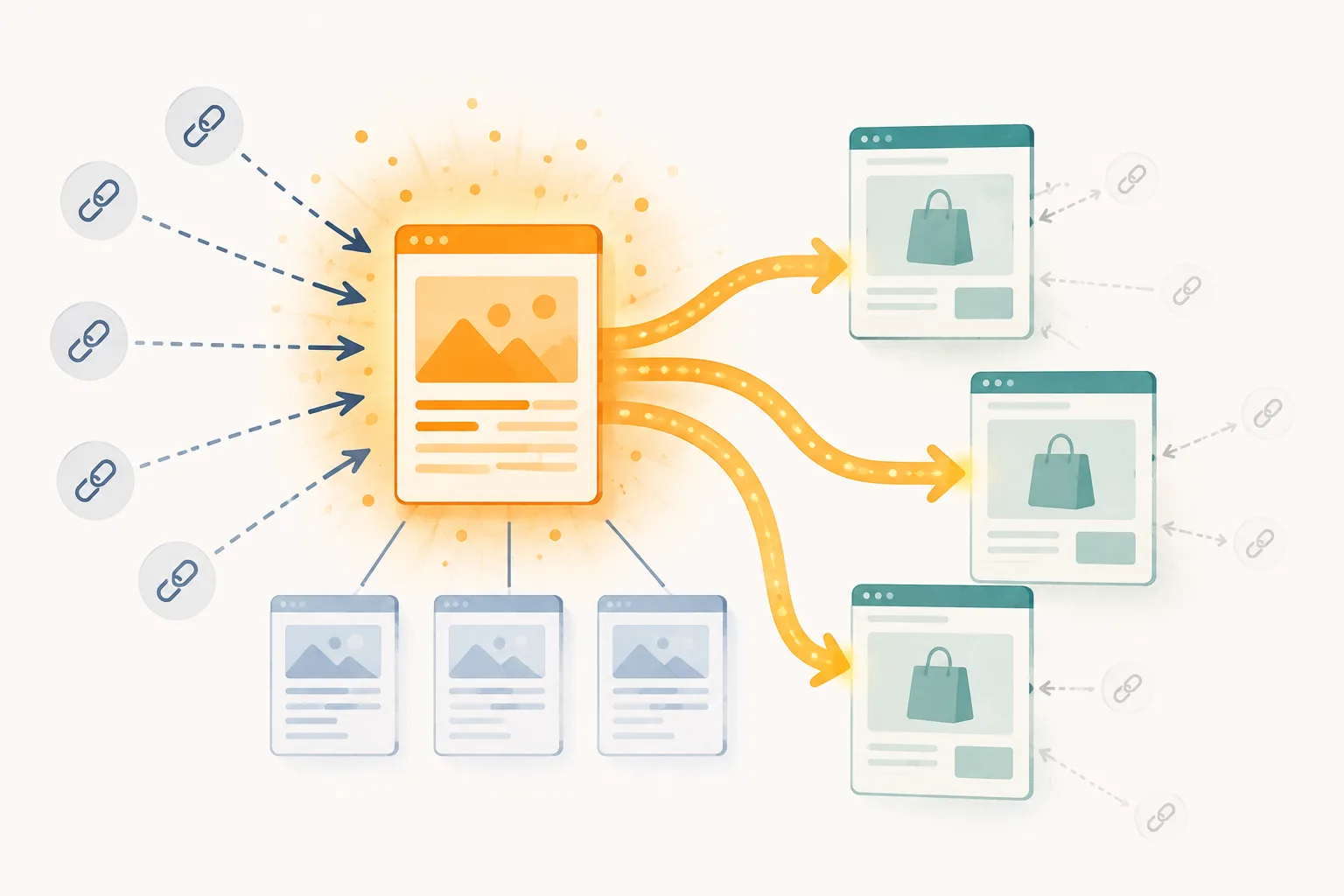
Worth doing before any of the above, and almost always skipped. Internal linking costs nothing, needs nobody’s cooperation, and can be finished this week. It does not acquire referring domains — which is why it is not on any link building list — but it redistributes the authority you already have to the pages that need it. On a plateaued site the effect is frequently larger than the next ten external links would be, because most sites have authority pooling on an old blog post while their commercial pages sit starved. The Linkexchange plugin includes internal linking intelligence free, with orphan page discovery, authority flow, broken link detection, and content gap analysis among the built-in reports. It surfaces which pages hold authority, which are cut off from it, and where the connections should be — without requiring a crawler you configure or a spreadsheet you maintain. It works independently of the exchange side, and there is a free credit allowance if you later want to use that too. The website traffic stopped growing guide covers how to tell whether internal distribution or external acquisition is actually your constraint. Diagnosing that correctly saves months.
Exchange as the zero-budget engine
Every viable mix needs one tactic that runs weekly without heroics. On zero budget the candidates are limited, and exchange is the main one. The reason it fits is that you pay with an asset you already own rather than with money: an outbound link slot on an existing page. No new content is written, no placement fee is paid, and the persuasion step does not exist because the other party wants the same thing you do. The constraints are real and worth stating. You need something worth trading — a very new site with no authority and no traffic is a poor partner. You give up outbound equity. And the same four rules govern whether it works: relevance, in-content placement, moderate pace, and partners with real traffic and clean outbound profiles. Exchange sits mid-table on the effort-and-risk ranking in the how to get backlinks guide, which is where a zero-budget engine should sit.
The asset that changes everything, if you can build it
The highest-return zero-budget move is publishing something people need to cite. Original data from your own operations. A survey of your industry, however small. A free calculator or tool. A definitive reference page on something nobody has documented properly. It costs time rather than money, it is the slowest route on this page, and it produces the best links available to a site without a PR budget — because they arrive unrequested and keep arriving for years. One asset can out-earn every other tactic combined. Two things make this fail: building something nobody needs, and building it and never telling anyone. The second is more common. An unpromoted resource earns nothing regardless of quality. If you run anything that generates data nobody else has — usage patterns, pricing observations, aggregate results — that is your single best move and you are probably not using it.
The free tools that cover the basics
Zero budget also means no paid tool subscription, which is where most people assume the plan breaks. It does not, for the first year or so.
Google Search Console. Free, and the only authoritative source on what Google has actually found. Links → Top linking sites gives a referring domain view; Top linked pages tells you where your earned authority landed; Internal links shows your current distribution. Export monthly and you have a survival record with no tooling at all.
A free backlink tool tier. The major backlink tools all offer one for verified site owners — authority metrics, dofollow filtering, anchor reports, and a lost backlinks report, which is the genuinely useful part. Pick one and stay in it, because counts are not comparable across tools and switching mid-programme makes your trend line meaningless.
Linkexchange — the free option for internal linking. This is the whole internal half, and it is free rather than a limited tier: opportunities, coverage, orphans, weak pages, dead ends, broken internal links, authority flow, money pages, content gaps, and cluster analysis. It reports against your live WordPress install rather than assembling from exports, so there is nothing to configure and nothing to reconcile. That matters because the alternative is a desktop crawler you install, connect to two APIs, and remember to run every quarter — exactly the setup work that gets done once and then abandoned. Nothing else on this list covers internal linking, and on a zero-budget plan it is the highest-return thing available to you.
Google Alerts. Brand, product, and founder names. Catches future mentions while the ask still converts best. What no free tier does is bulk competitor analysis and link intersect — finding domains that link to three competitors but not you. That is the real upgrade trigger, and it arrives later than most people assume.

What to skip, even though it is free
- Bulk directory submissions. Directories accepting everyone are read as spam. Industry-specific and geographic ones with real editorial standards are fine and worth an hour
- Comment and forum signature links. Nofollow, ignored, and a visible signal of desperation
- Free article syndication networks. Republished content on low-quality hosts, which is a scheme rather than a tactic
- Social profile links on fifty platforms. All nofollow, and creating dormant profiles achieves nothing. Two or three you will actually use is the right number
- Anything promising free links at volume. The numbers do not work unless the links are worthless, which they are
A realistic first quarter
Weeks 1–2. Internal linking audit and fixes. Relationship sweep. Unlinked mention sweep. Lost link reclamation. All of it costs time only, and it produces your first links inside a fortnight.
Weeks 3–12. A steady exchange programme, paced deliberately rather than in bursts. Two or three placements a month is a defensible rate for most small sites and a burst of fifteen is not.
Running throughout. One referenceable asset in slow development. Ship it around month three.
What you should not do: attempt every tactic simultaneously. Three executed consistently beats eleven attempted once, and that is more true at zero budget than at any other spend level, because your only real resource is attention.
When free stops being enough
Being honest about the ceiling matters as much as the tactics. Zero-budget link building works well up to a point. It will not get you links from major publications, it will not close a gap against competitors holding several hundred referring domains, and it does not scale past what one person can do manually. The signal that you have hit the limit: you have exhausted your relationships, converted your mentions, published your asset, run a steady exchange programme for two quarters, and the pages you want still sit behind competitors on referring domains. At that point the constraint is genuinely money or time, and the honest choice is to spend one, or to pick less competitive targets and build authority there first. Continuing to grind free tactics against a gap they cannot close is the slower way to lose.