

An unlinked mention used to be a near-miss worth converting. Current research suggests it now carries independent weight for AI visibility — in some datasets more than backlinks do. Here is what the evidence actually shows and how to act on it without abandoning link building. Figures current as of August 2026. Studies in this area disagree and the landscape moves quickly — treat everything below as directional.
For twenty years the answer to “does an unlinked mention count” was: not really, go and convert it. That answer is now wrong, or at least incomplete, and the reason has nothing to do with how Google ranks pages. It has to do with how AI systems decide which brands to name.
The distinction, precisely
A backlink is a clickable link from another site to yours. It passes ranking signals, sends referral traffic, and is measurable in any backlink tool.
An unlinked brand mention is your company, product, or founder named in text with no hyperlink. Traditional SEO treated this as an incomplete backlink.
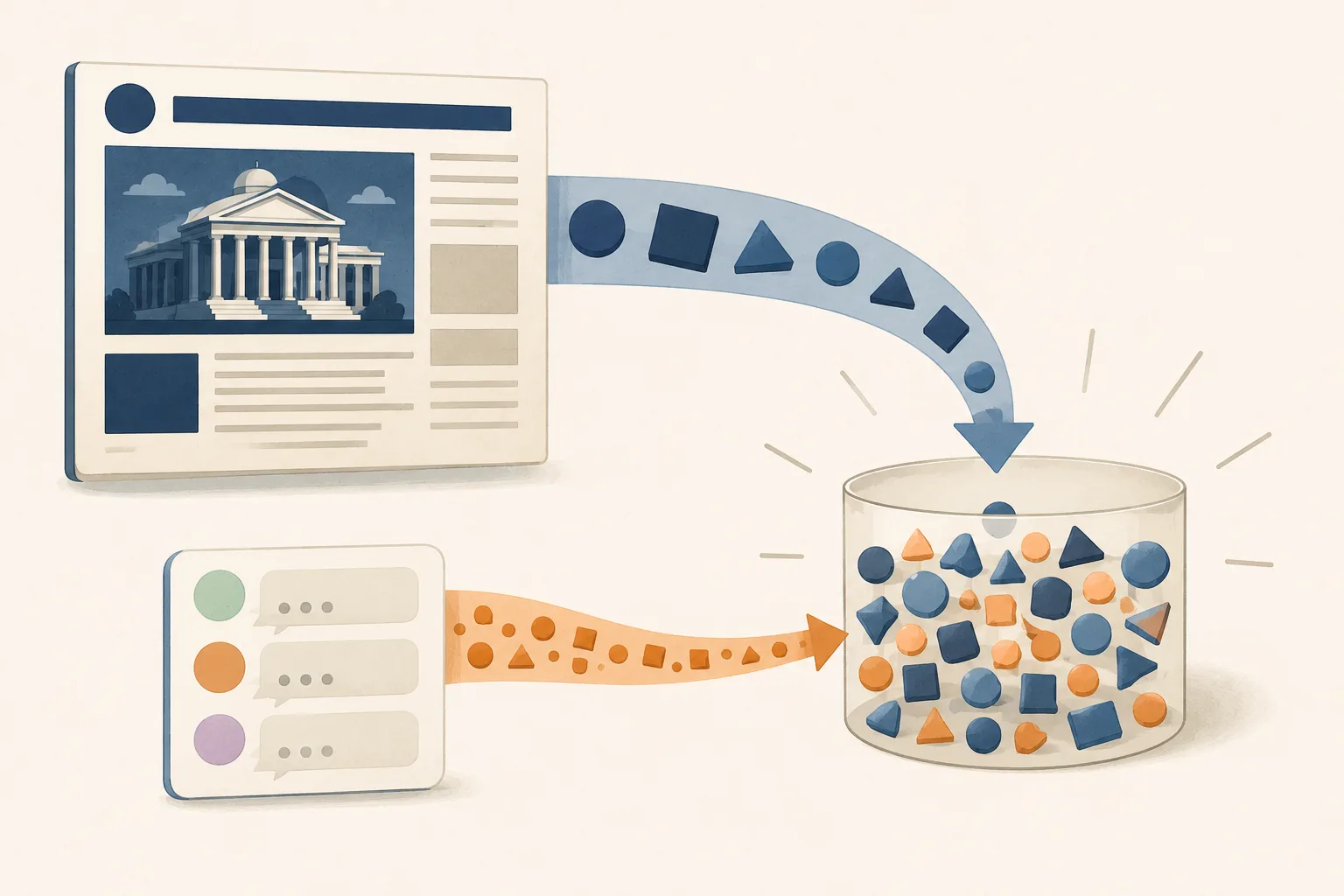
Brand search volume is the number of people searching your name directly. Not a mention at all, but it is downstream of mentions and it turns out to matter. The three are related. Mentions produce brand searches. Brand searches signal that an entity is known. And entity recognition appears to be a substantial input into which brands get named in AI-generated answers.
What the research actually shows
Several findings from 2026 point the same direction.
Backlink volume correlates weakly with LLM citations. Seer Interactive’s analysis of roughly 10,000 questions found a correlation of around 0.10 between raw backlink counts and being mentioned by ChatGPT — while first-page Google ranking correlated at around 0.65.
Brand search volume outperformed backlinks as a predictor. In at least one 2026 dataset, brand search volume was the strongest single predictor of AI citations. Ahrefs-based research has reported brand mentions correlating with AI Overview placement at a substantially higher rate than backlinks.
Entity consensus appears to matter directly. Analyses describe AI systems assessing whether what a brand says about itself aligns with what other credible sources say about it. That is a mechanism mentions feed and links do not, at least not specifically.
The places that generate mentions are the places getting cited. Cross-platform citation analysis puts Reddit as the most-cited domain overall across ChatGPT, AI Mode, Gemini, Perplexity and AI Overviews. YouTube is reported as the most-cited domain within AI Overviews specifically.
The caution, stated plainly
None of that means backlinks stopped working, and the strongest interpretation of this research is not the one being sold.
Correlation is not mechanism. Brands with high brand search volume are usually brands that are well known, well linked, and widely covered. Untangling which of those causes citation is not something any published study has done.
The weak backlink correlation has an obvious explanation. Links were never a direct input to citation. They are an input to ranking, which is an input to being in the candidate pool. Measuring links against citations skips a step and finds what you would expect.
Nobody is measuring the same thing. “Mentions” covers a named reference in a national publication and a passing comment in a forum thread. Aggregating them produces a number that describes neither. So the defensible reading is narrower than the headlines:
mentions have independent value they did not previously have, and that value is real enough to change how you allocate effort. It is not a reason to stop building links, which is covered in the brand mentions AI citations analysis.
The check worth running before changing anything
Before reallocating effort, find out where you actually stand on both signals. Twenty minutes.
Count your mentions. Search your brand, product, and founder names with -site:yourdomain.com. Note how many results are genuine references rather than directories or scrapes, and how many of those carry links. The ratio tells you whether you have a mention problem or a conversion problem — and they need different responses.
Check your branded search trend. Search Console, Performance, filter queries containing your brand name. Look at twelve months. Flat or falling branded search alongside growing content output means your content is being read without your name registering.
Check your entity consistency. Search your brand name and read what the first page says about you. If the description varies across your site, LinkedIn, and directory listings, you are splitting the entity across several partial identities.
Compare against referring domains. A site with 200 referring domains and 15 mentions has a different problem from one with 40 referring domains and 90 mentions. The first has authority without recognition; the second has recognition without authority. Both are fixable and the fixes are not the same, which is why the SEO plateau guide starts with diagnosis rather than tactics.
What actually changes about your work
Four things, in order of how much they cost you.
1. Stop treating unconverted mentions as failures. This costs nothing. The roundup that named you and did not link is an asset rather than a near-miss. Still ask — a link does everything a mention does plus passes authority — but a refusal is no longer a wasted effort.
2. Start counting mentions. If you only track referring domains, you are measuring one of two signals. Google Alerts on brand, product, and founder names is free. Paid brand monitoring tools do it more comprehensively. Either way, log mentions alongside links.
3. Track brand search volume as a metric. Search Console shows branded queries and their trend. If mentions are working, this rises. It is one of the cleaner proxies available for whether any of this is landing.
4. Add mention-generating activity to the mix. Communities, podcasts, expert commentary, forums where your expertise is genuinely relevant. These frequently produce nofollow links or no links at all, which is why link-focused strategies deprioritised them. That calculation has changed.

Why this is less of a strategy shift than it sounds
Here is the part that should be reassuring. The work that earns a link and the work that earns a mention are largely the same work. Publishing something worth referencing. Having original data nobody else holds. Being genuinely present in your industry’s conversations. Being quotable enough that a journalist uses you. Almost nothing on that list is specific to links. The tactics that produce mentions and links diverge much less than the metrics do, which means the practical change is smaller than the research implies. Where they genuinely diverge:
- Reddit, forums and communities — high mention value, near-zero link value, and previously ignored by link-focused strategies
- Podcasts and video — mentions in transcripts, links usually nofollow in show notes
- Expert commentary — publications frequently name a source without linking
- Exchange and placement tactics — high link value, low mention value, since a contextual link in an article body rarely names your brand prominently enough to register as an entity signal
That last one is worth sitting with. It suggests a mix rather than a substitution: acquisition tactics that build authority, plus presence tactics that build entity recognition. The how to get backlinks ranking covers the first half by effort and return.
The practical consequence is that you need both halves running, and they compete for the same hours. Community participation, podcasts, and expert commentary all cost attention. If your authority work also costs attention every week, one of the two gets dropped — and it is usually the presence work, because it produces nothing measurable for months. That is the argument for making the authority half as low-maintenance as you can. Linkexchange runs it from inside your WordPress dashboard: you set the criteria once — target page, niche, minimum DR — and publishers meeting them take the offer, so the acquisition side does not need weekly attention to keep producing. The free internal linking tools matter here for a reason specific to this article. Entity recognition is partly about coherence — whether your site reads as authoritative on a subject rather than as scattered posts. Cluster analysis groups your existing articles by topic and flags which clusters have no pillar holding them together, which is the same coherence question from the structural side.
What it does not do is generate mentions. Nothing does, reliably. Being present in your industry’s conversations is work only you can do, and freeing up the time to do it is the most a tool can honestly offer.
How to generate mentions deliberately
- Answer questions where you are genuinely qualified. Reddit, industry Slack and Discord communities, Stack Exchange, LinkedIn. Participate as a person, not as a brand — self-promotional posting gets removed and does the opposite of what you want
- Publish data nobody else has. A proprietary statistic gets repeated with attribution far more than an opinion does. This is the single highest-leverage move for both mentions and links
- Get quoted. Journalist request platforms produce mentions even when the link does not materialise, which improves the return on a tactic that otherwise looks marginal
- Appear in comparisons and roundups. Being included in “best tools for X” lists generates entity associations even without a link
- Keep naming consistent. Your business name, description, and category should be identical across your site, LinkedIn, and every profile. Inconsistency splits the entity
- Encourage customer discussion in places where it happens naturally. Not astroturfing — which is detectable, prohibited on most platforms, and counterproductive — but making it easy for genuine users to talk about you
What not to conclude from any of this
Do not stop building links. Rankings still gate the candidate pool, links still drive rankings, and the correlation between first-page position and citation remains the strongest single finding in this area.
Do not buy mentions. Paid mention services are the next version of paid links, with the same problems and less evidence that they work.
Do not manufacture forum presence. Astroturfing is detectable, gets accounts banned, and generates exactly the wrong kind of association.
Do not over-index on one study. The research is young, the samples differ, and the systems change faster than the studies publish. The reasonable position is a portfolio one. Keep the authority work that puts you in the pool. Add the presence work that makes systems recognise you as an entity worth naming. Measure both, because measuring only one gives you a picture that is missing half the signal.