
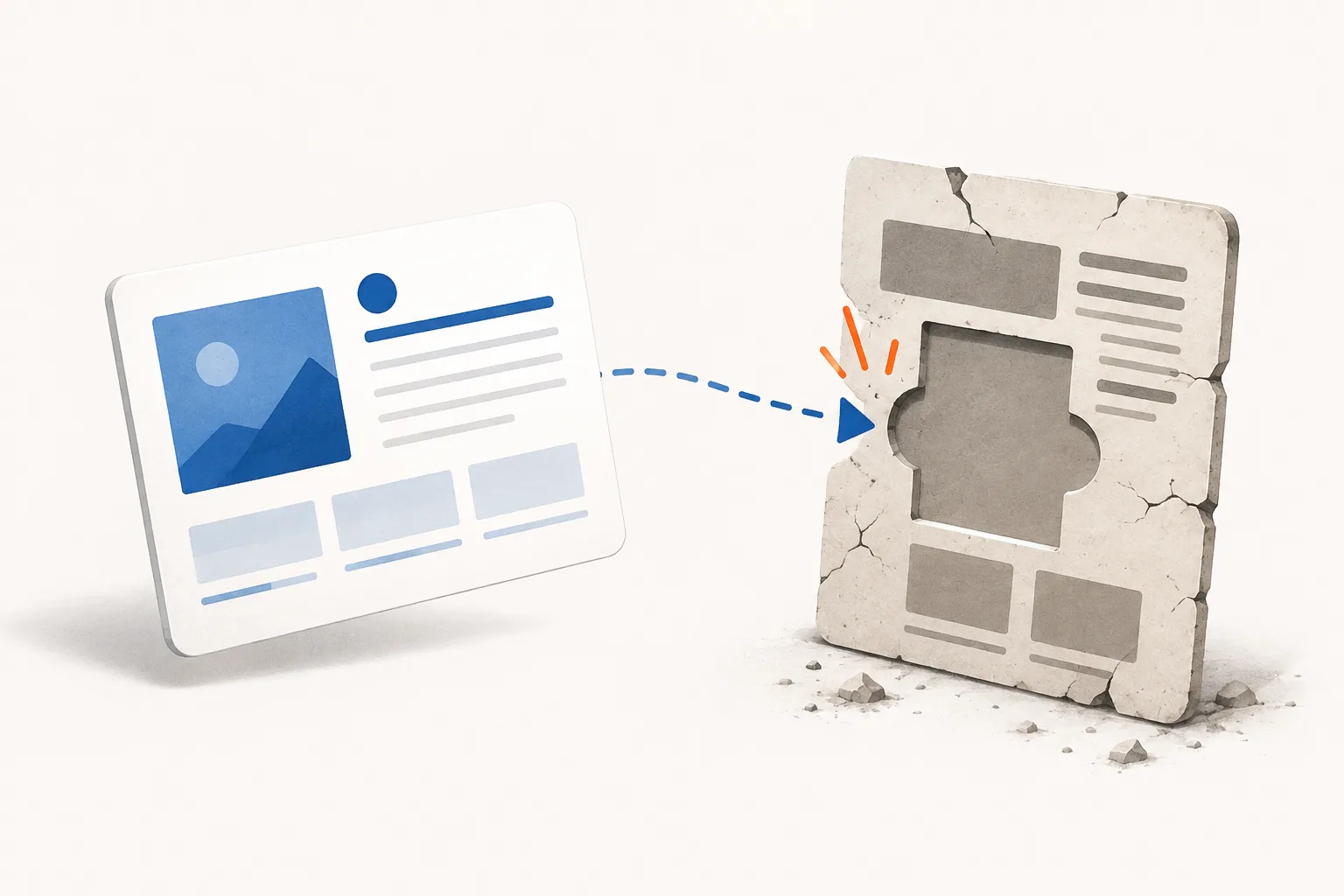
Broken link building has the strongest pitch in outreach — you are fixing something for them — and the worst hit rate of any tactic that works. Here is the full process, the numbers that decide whether it is worth your time, and the version that actually converts.
The premise is genuinely good. Find a page linking to a resource that no longer exists, tell the publisher their link is broken, and offer your equivalent page as the replacement. You are not asking for a favour. You are reporting a defect and supplying the fix in the same message. That is a better offer than almost any other outreach tactic makes. And it still fails most of the time, for reasons that have nothing to do with the pitch.
Why the good pitch does not save it
Four filters compound, and each one removes most of what survived the last.
The dead page has to have links worth chasing. Most broken pages have two or three inbound links from sites nobody reads.
The linking pages have to be worth a link from. Of the sites still pointing at a dead resource, a large share are themselves abandoned — which is frequently why nobody has noticed the broken link in years.
You need a genuine replacement. Not a vaguely related page. Something that actually serves the purpose the original link served, or the publisher has no reason to swap it.
Someone has to still be maintaining the site. This is the killer. A broken link that has sat there for three years is strong evidence that nobody is editing that page. Multiply four filters together and a starting list of two hundred prospects becomes a handful of realistic ones. That is not pessimism — it is what determines whether the tactic belongs in your week.
The process, step by step
Step one — find dead pages worth targeting. Three routes: Competitor 404s. Every backlink tool has a best-by-links report that can be filtered to 404 responses. Run it on a competitor and it surfaces their dead pages that still hold inbound links. Dead sites in your niche. Tools, blogs, or resources that shut down. Industry news and community threads surface these. A defunct tool that everyone once linked to is the single richest source in this tactic. Resource page scanning. Find pages curating links in your niche, then check them for 4xx responses. Any desktop crawler does this; on a small list, opening the pages and checking manually is faster than configuring one.
Step two — pull the backlink profile of the dead URL. Whichever tool you use, set the mode to the exact URL rather than the domain. Export the referring pages, not just the domains — you need to know which specific page carries the link.
Step three — filter hard. Remove anything with no traffic, no authority, a compromised outbound profile, or no update in two years. Check the last-modified date or recent post dates. The five-minute partner audit applies here in full, and the backlinks without cold outreach guide covers the same quality bar across the no-pitch tactics.
Step four — confirm the link is genuinely broken. Open the page and click the link. Tools report stale data, and nothing burns credibility faster than telling a publisher their working link is broken.
Step five — check you have a real replacement. If you do not, either write one or move on. Offering a loosely related page is the most common reason this tactic fails at the last step.
The pitch
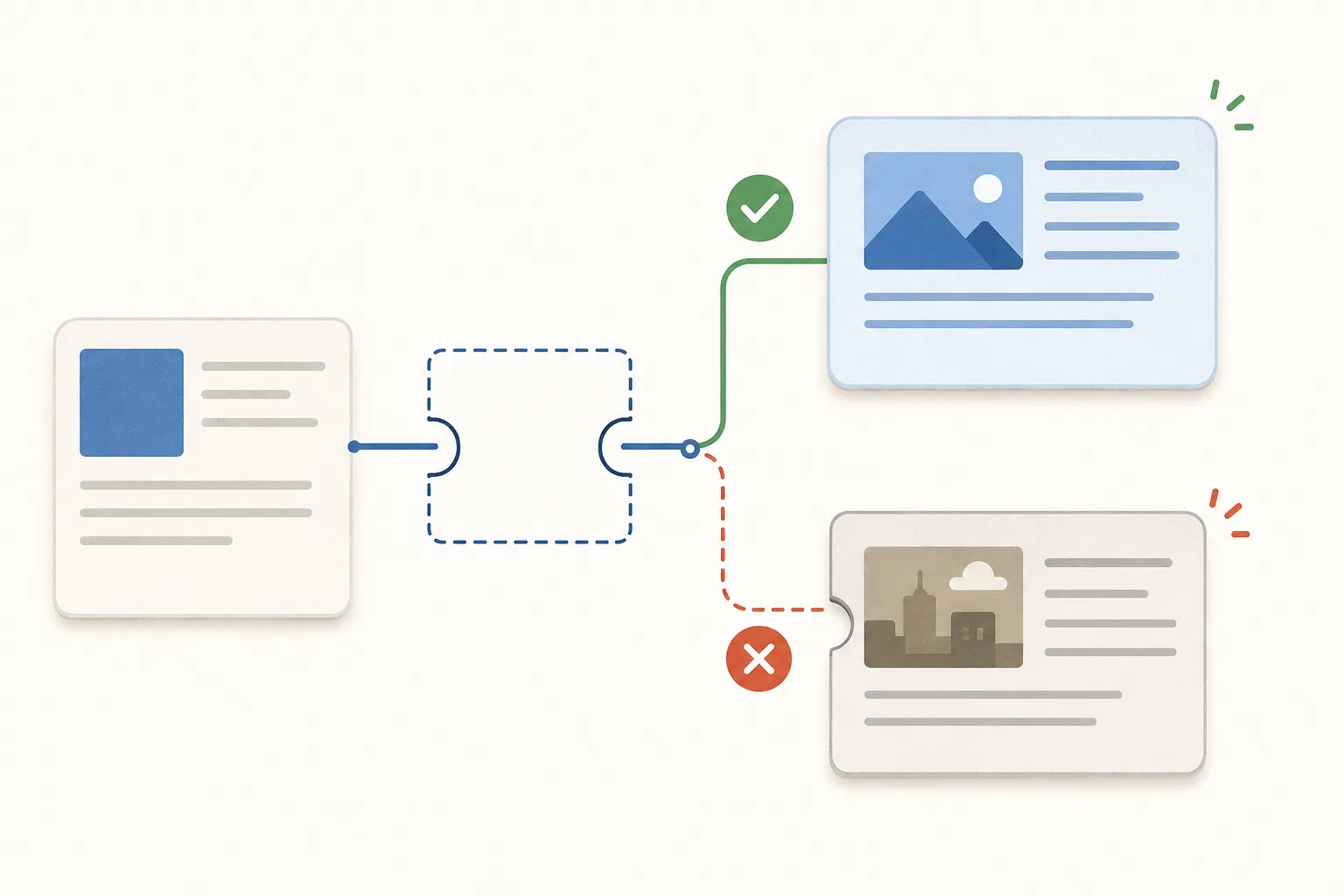
Subject: Broken link on your [topic] page Hi [name], The link to [resource name] in your [specific section] is returning a 404 — looks like the site came down some time last year. If you need a replacement, [your URL] covers the same ground. Either way, thought you would want to know. [name]
What makes it work: it names the specific link and section, it states the problem before the offer, the replacement is one line rather than a pitch, and the last sentence means the email costs nothing to ignore. What kills it: leading with your page, listing three of your pages, or mentioning SEO. The moment it reads as a link request rather than a bug report, the good pitch evaporates.
The numbers, worked through
Start with 200 dead-page backlinks.
After removing low-authority and no-traffic sites: perhaps 60.
After removing abandoned sites — no posts in two years, no visible maintenance: perhaps 25.
After removing those where you have no genuine replacement: perhaps 15. Fifteen emails. Reply rates on this tactic run above general cold outreach because the offer is better, but conversion to a placed link is still modest. A few links from a starting list of 200 is a realistic outcome.
The time cost: finding and pulling the profiles is an hour or two. Filtering properly is the expensive part — several hours if done honestly. Writing fifteen genuinely specific emails is another two. That puts you in the same effort-per-link range as guest posting, which is why the how to get backlinks ranking places broken link building as a supplementary tactic rather than an engine. It scales poorly, and the poor scaling is structural rather than fixable.
What to do when they reply but do not link
A specific outcome worth planning for, because it happens more than a flat rejection. The publisher thanks you, removes the broken link, and does not add yours. From their side that is a complete fix — the defect is gone. You have improved their page and received nothing. This is not bad faith and it is not worth chasing. It is the predictable result of a pitch honest enough to lead with the problem rather than the offer, and the alternative — leading with your link — converts worse overall. Two things reduce it:
Make the replacement obviously equivalent. If your page covers exactly what the dead one covered, swapping is easier than deleting. If it is adjacent, deleting is easier.
Mention what the original provided. “The original had the comparison table your paragraph refers to — mine covers the same figures” gives them a reason the sentence still needs a link. Without it, removing the link and the sentence is the path of least resistance. Track this outcome separately from rejections. A high rate of fix-without-link usually means your replacements are not close enough matches, which is a fixable problem rather than a tactic-level failure.
Where it genuinely shines
Three situations change the calculation completely.
A well-known resource in your niche shut down. A tool, a database, a long-running blog with hundreds of inbound links. One event produces a prospect list that would take months to assemble otherwise, and every publisher pointing at it has the same problem simultaneously.
You already have the replacement. Most of the cost in this tactic is producing a genuine equivalent. If your existing library already covers the ground, the economics improve sharply.
You are targeting resource pages. Curated link pages break constantly, their maintainers are the people most likely to care, and inclusion often means a permanent editorial placement rather than a one-off mention. That overlap is why resource page outreach and broken link building are usually run together, and both sit in the same tier of the link exchange comparison of sustainable tactics.
Two variants worth knowing
Broken link building in reverse. Instead of finding dead pages and chasing their links, find pages in your niche and crawl them for any broken outbound links — to anyone. Then offer replacements where you have them. Lower hit rate per page, but you control the prospect list rather than depending on which resources happen to have died.
The 301 variant. Sometimes the dead resource redirects to something irrelevant rather than 404ing — a shut-down tool now pointing at an acquirer’s homepage. Publishers rarely notice this, the reader experience is bad, and the fix is the same. Nobody scans for it, which makes it a genuinely underworked source.
The version nobody runs, on their own site
Everything above chases broken links on other people’s sites. The same problem exists on yours, it costs nothing to fix, and it needs nobody’s cooperation. Broken internal links waste crawl budget, dead-end readers, and strand the authority that was flowing through them. On any site more than a year old there are usually several — most often created when someone changed a post slug and nothing warned them.
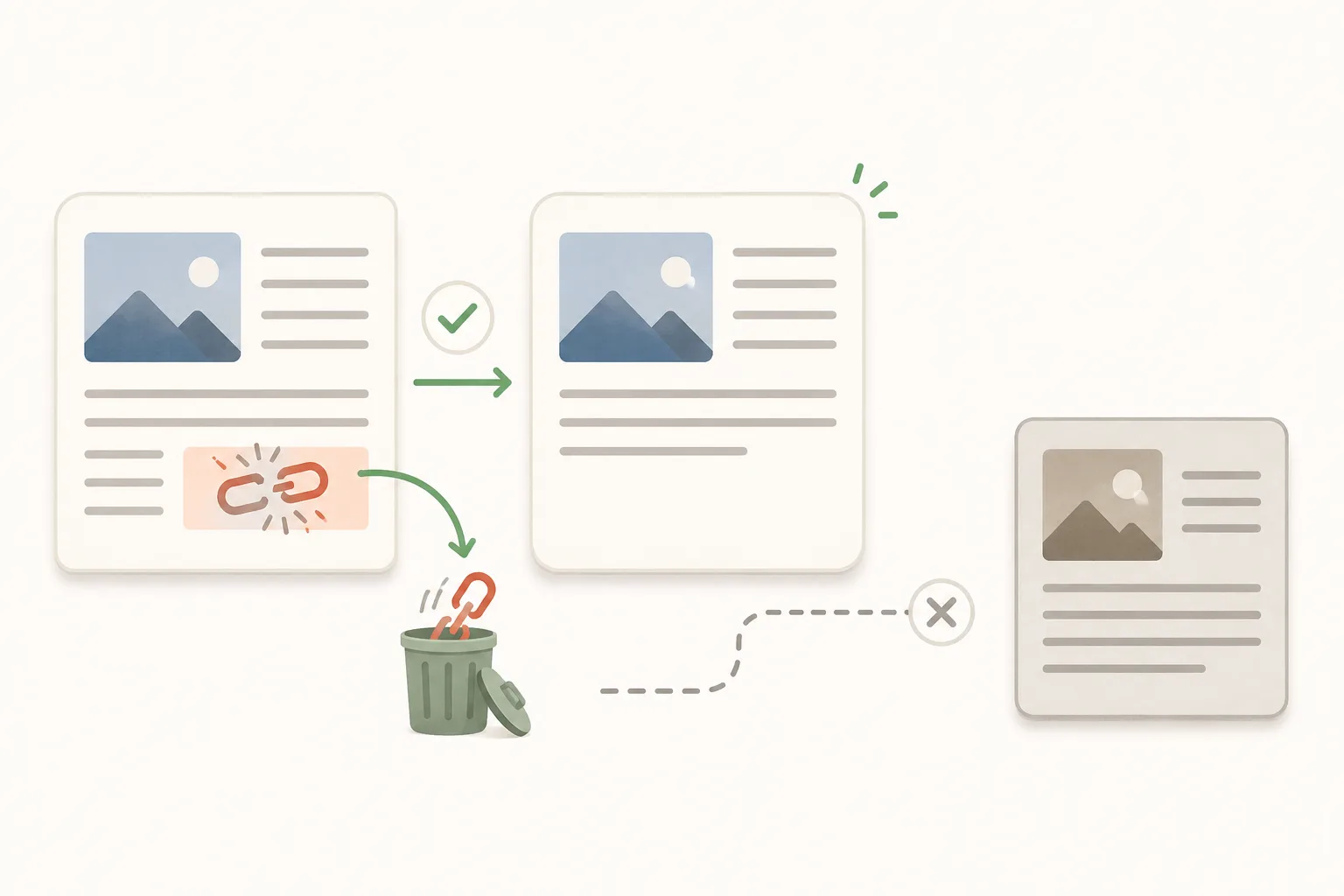
Linkexchange scans your site, finds them, and repairs them. The free internal linking analysis surfaces every broken internal link with the page containing it. Then it resolves each one by whichever route actually applies:
- The current URL, where the page still exists and only the slug changed. This is the most common case by a distance, and the fix is exact
- The archived version, where the page is genuinely gone and the Wayback Machine holds it. The reference survives instead of being deleted
- The closest equivalent on your site, where neither applies but you have covered the same ground elsewhere
Bulk fix commits every repair in one click on the paid tier, rather than opening thirty posts one at a time. That is the part worth noticing against everything above. The external tactic requires you to have a genuine replacement, and finding one is most of its cost — five steps in, the article says so plainly. On your own site the replacement usually already exists, and the tool finds it for you.
The comparison, plainly. Broken link building on other sites might convert three prospects out of two hundred after a day of filtering. Fixing broken links on your own site restores flow through every one of them, takes an afternoon, and depends on nobody. Run the internal version first. Then decide whether the external one is worth your week.