
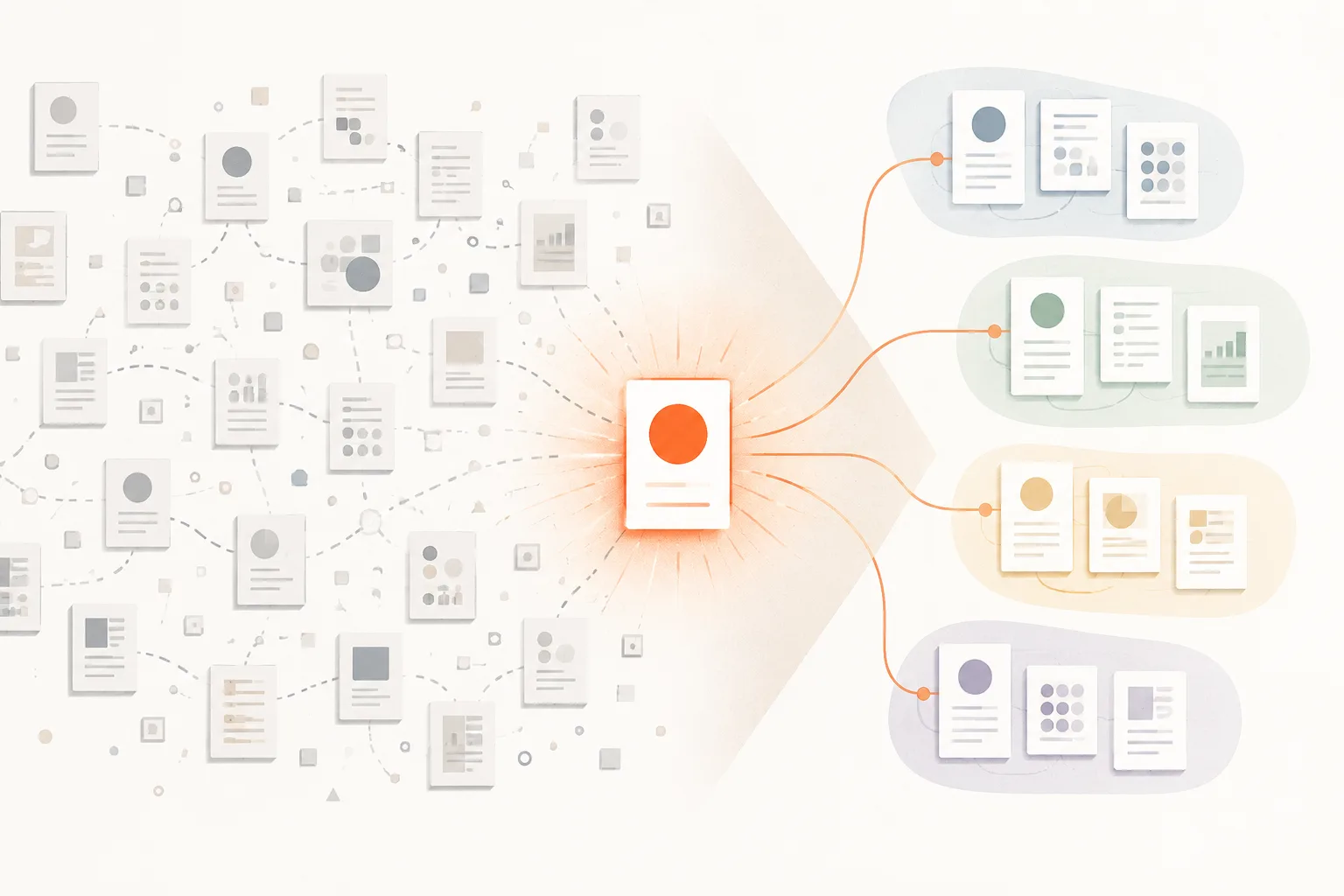
Ranking first no longer wins the citation. The share of AI Overview citations coming from top-ten pages has halved in under a year, which means the work has shifted from position to extractability. Here is what the 2026 data says actually determines citation. Figures current as of August 2026. This area moves fast enough that studies six months apart describe different systems — check the sources before quoting anything below.
The received wisdom on AI Overviews was that citation followed ranking. Get into the top ten, and you were in the pool the answer was assembled from. That was accurate when it was measured. It is substantially less accurate now, and the change is the most important thing to understand about this in 2026.
The number that changed everything
An Ahrefs study found that roughly 76% of URLs cited in AI Overviews also ranked in the top ten organic results for the same query. That figure was quoted everywhere, including in guidance written this year. A follow-up covering 863,000 keywords and around 4 million citations in early 2026 found the overlap had fallen to 38% — with citations now split fairly evenly between pages ranking 11 to 100 and pages beyond the top 100. Read that again, because the implication is large.
Nearly two-thirds of cited pages are not in the top ten for the query they are cited on. Ranking helps and it does not gate anything. Two things follow. Pages that cannot realistically reach position one can still be cited. And pages that do rank first are not safe, because they can be passed over for a clearer passage further down. That does not make rankings irrelevant — a page nobody can find is a page nothing cites, and authority still governs whether you are in the candidate pool at all, which the how to get backlinks ranking covers. It does mean structural work now competes with link building for your attention, where previously it was downstream of it.
The current scale of the feature
For context on how much this matters: AI Overviews appear on roughly 48% of Google queries as of early 2026, with concentration varying sharply by sector — reported at up to 88% for healthcare, 83% for education, and 82% for B2B technology searches. Around 88% of AI Overview triggers are informational-intent queries, which is precisely the content most blogs are built around. If your traffic comes from informational content in a technical or professional sector, this is not a peripheral concern.
What actually determines citation
The research converges on four things, in roughly this order of leverage.
1. Extractable structure. AI systems lift passages rather than pages. Content with clear formatting is reported to be meaningfully more likely to be cited — figures in the region of 28 to 40% more likely appear across analyses. Over half of AI Overview citations reportedly pull from the upper portion of a page.
2. Definitive language. This is the most actionable finding in the whole area. Cited text is nearly twice as likely to contain definitive statements as hedged ones — one analysis puts it at 36.2% against 20.3%. Qualifier-heavy writing gets passed over. If your sentence is “results may vary depending on a number of factors,” it is unquotable. If it is “sites in this band typically see movement within six weeks,” it can be lifted directly.
3. Specific, verifiable, attributed claims. “Most businesses see improved results” is not extractable. A claim with a number and a named source is. Adding statistics reportedly raises AI visibility by around 22%, and adding quotations by around 37%. Content with original statistics is reported at 30 to 40% higher visibility.
4. Entity and brand consensus. Systems assess whether what you say about yourself aligns with what other credible sources say about you. That makes third-party mentions — linked or not — a direct input rather than a side benefit, which is covered in the do backlinks still matter analysis.
The single highest-return change: the answer capsule
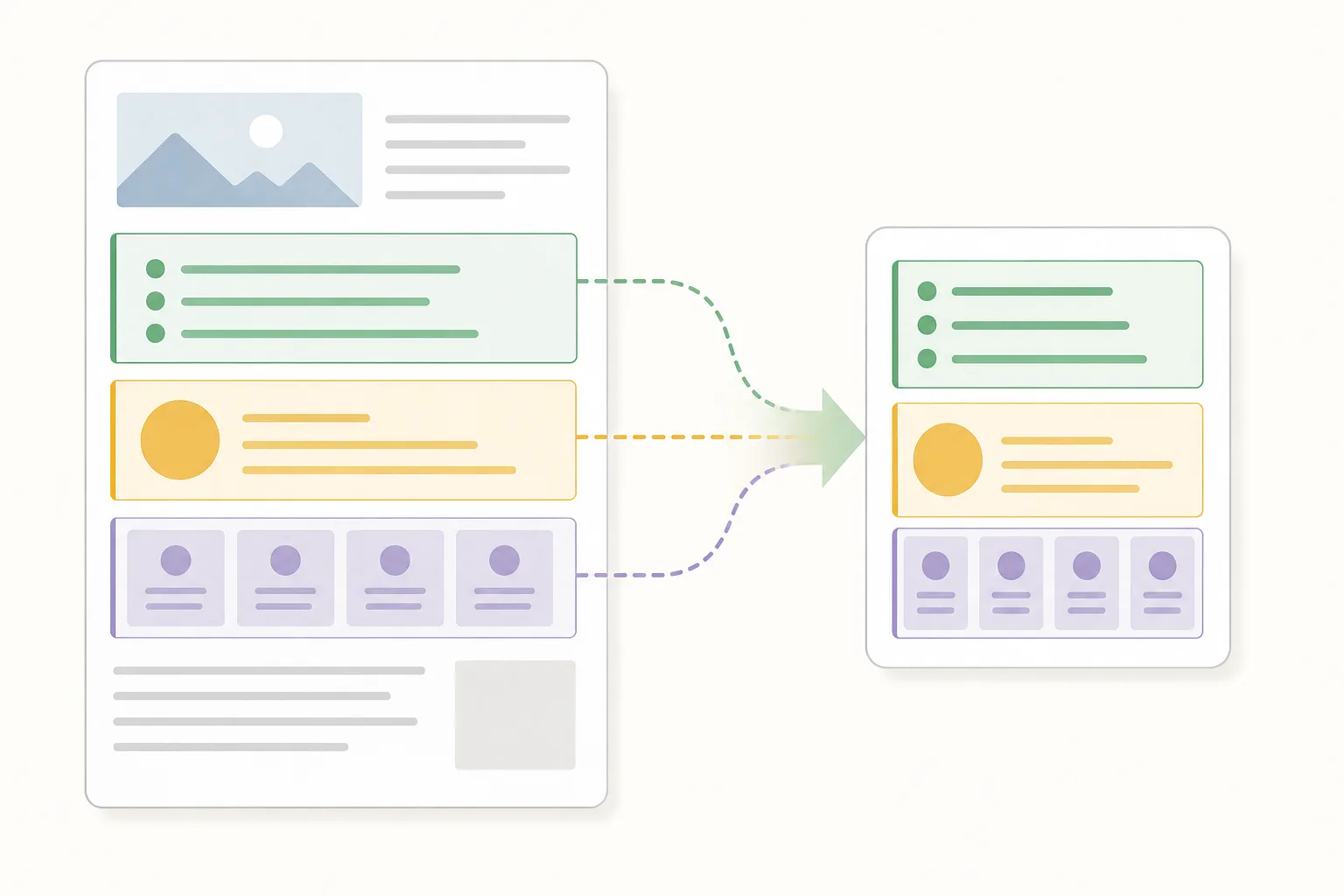
Open every page and every major section with a 40 to 60 word paragraph that answers the query directly. AI Overviews extract these almost verbatim. The structure that works:
- State the answer in the first sentence. Not context, not throat-clearing, not “in today’s competitive landscape”
- Support it in the next two or three with the mechanism or the number
- Then expand at whatever length the topic deserves
This is the same discipline as writing for featured snippets with one important difference: featured snippets rewarded the single best answer to one query, while AI Overviews assemble from several sources answering several sub-questions. That means multiple capsules per page — one under each major heading — rather than one at the top. It also means you are not competing for a single slot. Several pages get cited on most overviews, which is a materially better game than the snippet era.
-
Fan-out queries, and why they matter more than the head term
Google decomposes a search into sub-queries and assembles the answer from sources addressing each. Ranking for those sub-queries is reported to raise citation odds substantially — one analysis puts the lift at 161%. The practical consequence: a page targeting one head term with one comprehensive answer is worse positioned than a page addressing six specific sub-questions under clear headings, even if the second ranks lower overall. To find the sub-queries: type the head term into Google and read the People Also Ask box, then expand two levels. Those are the questions being decomposed. Each deserves a heading and a capsule.
Formats that get cited
Consistently reported across analyses: numbered step-by-step processes, definitions, structured comparisons, lists, tables, and data-backed expert positions. The common property is that each has a clear boundary. A system can lift a numbered list or a table row without needing to understand the surrounding narrative. A flowing 400-word paragraph making the same argument has no extractable unit. Heading hierarchy does the same job at a larger scale. Descriptive H2s and H3s that state their own claim — rather than labelling a topic — tell an extraction system what each block contains.
Freshness is a real ranking input here
Content under 90 days old is reported to be cited more often, and practitioners describe a measurable decay after that window. This is more tractable than it sounds. It does not require constant new publishing — it requires updating your best pages quarterly. Refresh the statistics, add a section addressing a sub-query you missed, update the published date honestly, and request reindexing. Updating an existing page that already holds authority is consistently faster than ranking a new one, which the SEO plateau guide covers in the context of content ceilings generally.
Where citations actually come from
Worth knowing, because it reframes where to spend effort. Cross-platform analysis of citation sources puts Reddit as the most-cited domain overall across ChatGPT, AI Mode, Gemini, Perplexity and AI Overviews. YouTube is reported as the most-cited domain within AI Overviews specifically, with citations up sharply over six months. That is uncomfortable if your strategy is entirely your own blog. The implication is not to abandon your site — it is that presence in the places these systems draw from is a separate workstream from ranking your own pages, and it is one most SEO teams have not started.
How to tell whether any of this worked
Measurement here is genuinely harder than in traditional SEO, and most people do not attempt it.
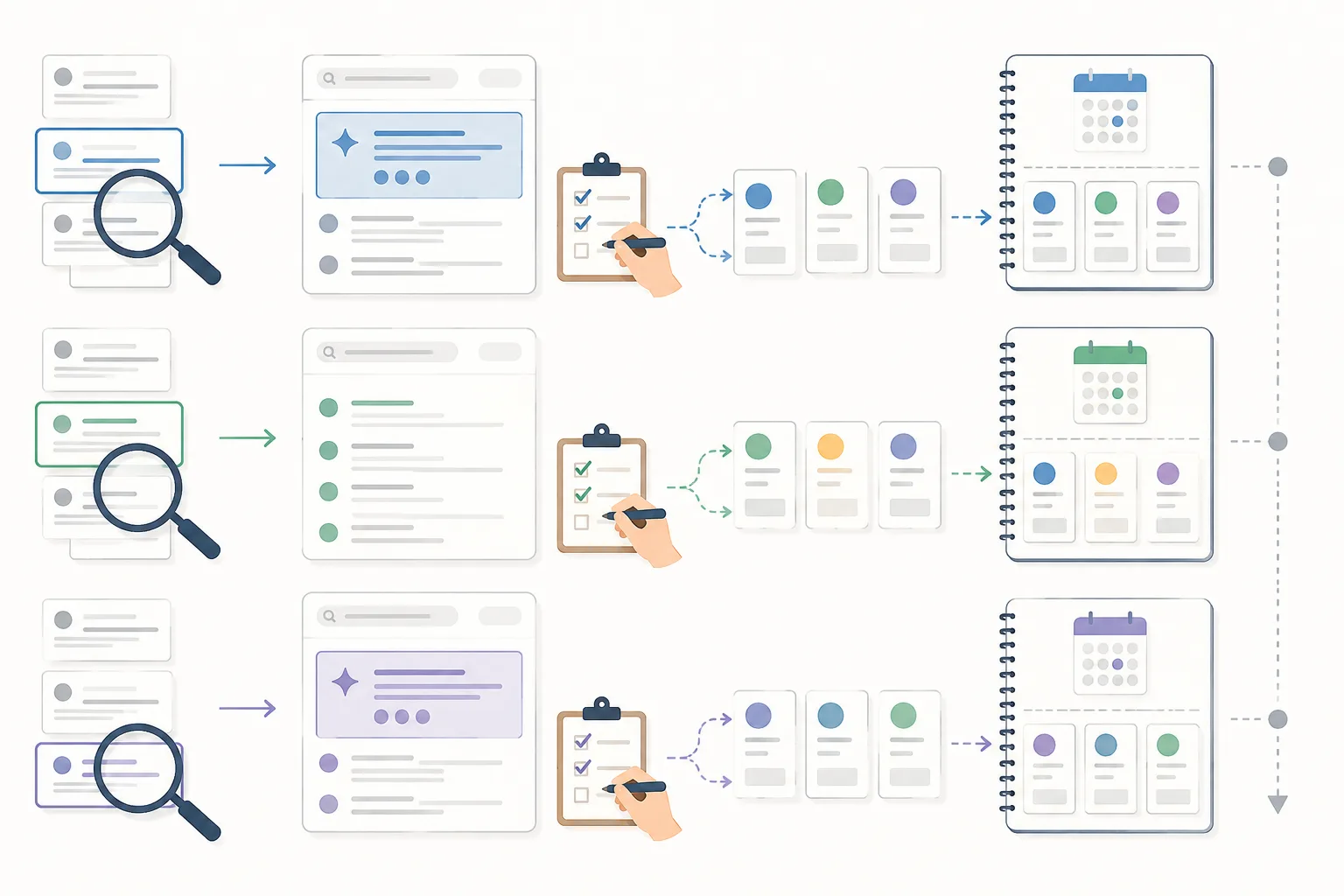
- Manual sampling is the honest baseline. Take twenty queries you care about, search them in an incognito window, and record whether an AI Overview appears and which domains it cites. Repeat monthly. Tedious, and it is the only method that shows you what a user actually sees.
- Search Console is indirect but useful. AI Overview impressions are folded into standard reporting rather than broken out, so you cannot isolate them. What you can watch is the pattern: impressions holding steady or rising while clicks fall is the signature of being seen inside an answer rather than clicked through to.
- Track brand search volume. If citation is working, more people encounter your name inside answers, and some fraction of them search for you directly afterwards. That shows up as branded query growth, and it is one of the cleaner proxies available.
- Referral traffic from AI platforms appears in analytics from ChatGPT, Perplexity and others as distinct referrers. Small numbers for most sites, but the trend line is informative and it is real traffic rather than an inference. Set a baseline before making changes. Without one you will not be able to distinguish a working programme from a moving landscape, and this landscape moves.

The technical layer
None of this forces a citation, but it removes ambiguity:
- FAQPage schema on genuine question-and-answer sections. It states explicitly which text is the question and which is the answer, which is exactly what passage-level matching needs
- Article schema with a named author, a real bio, and an accurate date
- HowTo schema on step-by-step processes
- Organization schema with consistent naming across your site, LinkedIn, and any profile where your brand appears. Entity consistency is what lets systems connect the mentions
- Clean heading hierarchy — one H1, logical H2s and H3s, no styling headings for appearance
Where to start
The fastest wins come from upgrading pages that already have authority rather than publishing new ones.
- List your five highest-traffic informational pages
- Add an answer capsule at the top of each and under each major heading
- Strip the hedging. Find every “may,” “can,” “often depends” and either commit to a claim or cut the sentence
- Add specifics. Replace generalities with numbers and named sources. If you have proprietary data, use it — a figure nobody else has published is far more citable than one repeated everywhere
- Add sub-query headings from People Also Ask
- Add FAQPage schema where genuine questions exist
- Set a quarterly refresh on those five pages
None of this requires a rebuild. It is editorial habit applied one page at a time, starting with the topics you most want to be visible for.
The half of this that is not editorial
Everything above is what you do to a page. It assumes the page is already in the candidate pool, and for a lot of sites that assumption is doing the heavy lifting. Two structural things decide whether it is true.
Which of your pages hold authority, and whether it reaches the ones you want cited. The instruction above is to start with your five highest-traffic informational pages — but the pages carrying your external links are frequently not those five, and if nothing internal connects them, the strong pages stay strong and the ones you are rewriting stay weak.
Whether the sub-question pages are connected to each other at all. Fan-out means several of your pages can be cited on one query. That works considerably better when those pages form a cluster with a pillar than when they sit as unrelated posts, because the grouping is part of how the relationship is understood. Linkexchange covers both, free. Authority flow shows where your external links land and where the flow stops. Money pages shows which of your priority pages are receiving nothing. Cluster analysis groups your existing articles by topic, identifies which need a pillar, and lists the connections missing between them — which is the same structure the fan-out section above describes, built from the pages you already have. The editorial work makes a page extractable. This decides whether it was ever a candidate.