
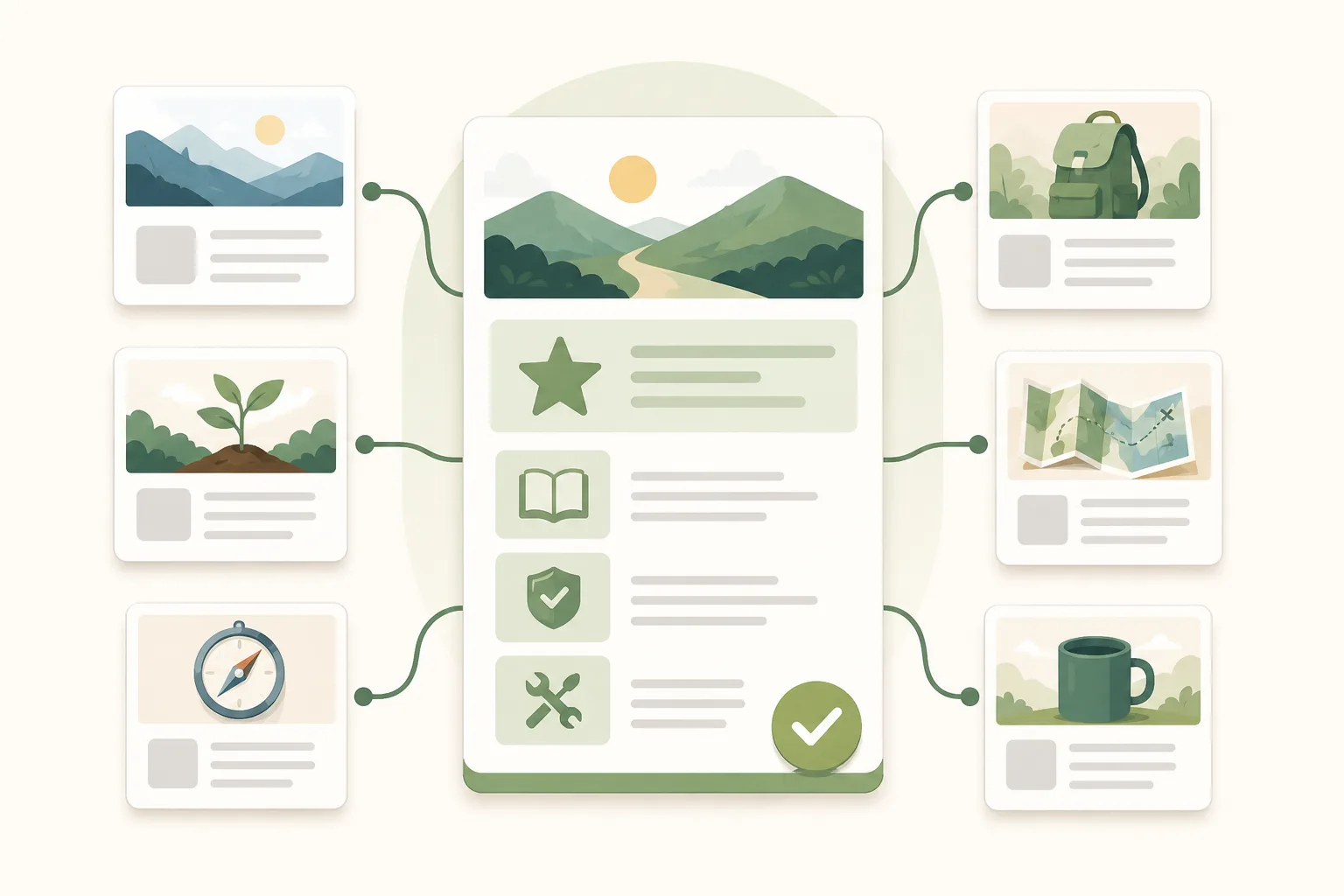
Resource pages exist to link out. That makes them the only outreach target whose entire purpose aligns with what you want — and the reason the tactic still works when most outreach does not.
Almost every link building tactic asks a publisher to do something outside their normal behaviour. Add a link they had not planned to add. Edit a published page. Accept a contributed article. Resource pages are different. The page exists specifically to collect useful links on a subject. Someone built it deliberately, maintains it, and considers adding good links to be the point rather than a favour. That alignment is the whole reason this tactic survives, and it explains both where it works and where it does not.
What counts as a resource page
Any page whose function is to point readers at other things:
- Curated link lists — “best tools for X,” “resources for Y,” “recommended reading”
- Industry directories with genuine editorial standards, not the submit-anything kind
- Association and membership listings — trade bodies, professional groups, chambers
- University and library guides — subject guides on .edu domains, frequently maintained by a named librarian
- Community wikis and awesome lists — GitHub “awesome” repositories and their equivalents
- Roundups and comparison pages that list options in a category
The common property is that the page’s value to its own readers increases when it links to something genuinely good. That is not true of an article, where an outbound link is at best neutral for the publisher. That difference runs through everything below, and it cuts both ways.
On a resource page, the outbound link is the product. The maintainer wants more of them, within reason, because a thin list serves nobody. Adding an entry costs them nothing they value.
In an article, the outbound link is a cost. Every link divides what that page passes onward, so a publisher linking out carelessly is spending something real. That is why article placements are harder to get, worth more when you get them, and why an exchange partner is giving up more than a resource page maintainer is. It also means the same check produces opposite readings depending on the page type. Four hundred outbound domains on a curated list is a librarian doing the job. Four hundred spread across a site’s articles is a shop. Before deciding what an outbound count means, ask which kind of page your link would sit on — which is why matching in Linkexchange considers where a link would actually land rather than only the domain’s headline metrics.
Finding them
Search operators do most of the work. Run these against your niche:
"your topic" + "resources"
"your topic" + "useful links"
"your topic" + inurl:resources
"your topic" + intitle:resources
"your topic" + "recommended tools"
"your topic" + inurl:links
Two refinements worth adding:
Restrict by domain type. Adding `site:.edu` or `site:.org` surfaces university guides and association listings, which are frequently the highest-quality resource pages and the least contested.
Work backwards from competitors. Pull a competitor’s backlink profile and filter referring pages for resource-page URL patterns. Anyone linking to a competitor from a curated list is a qualified prospect by definition — they have already decided this category belongs on their page.
Check who links to a defunct resource. If a tool or site in your niche shut down, every resource page still listing it has a gap. That overlaps with the process in the link building tactics ranking for broken link building, and the two are efficiently run together.
Qualifying before you pitch
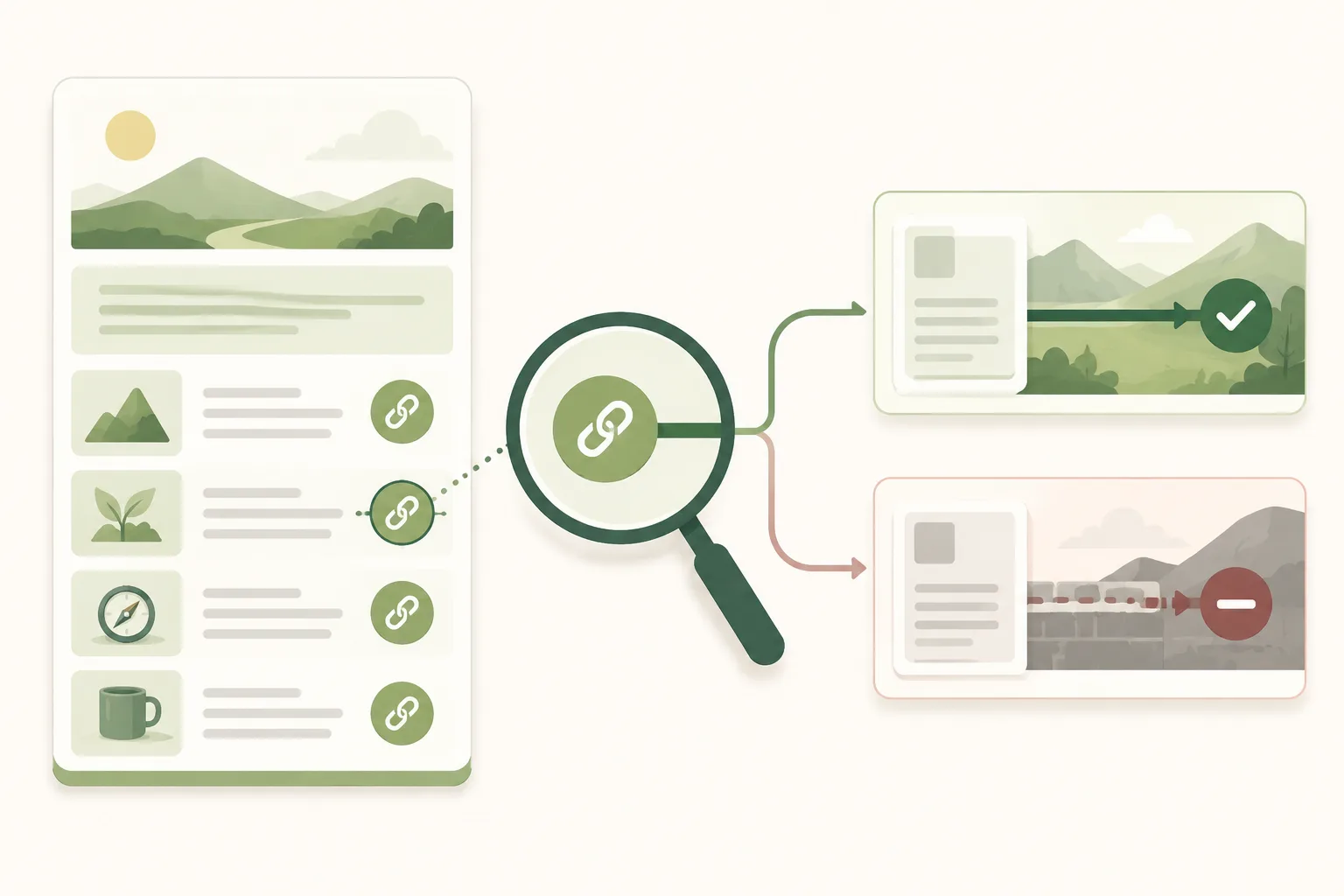
Resource pages have a specific failure mode: many of them are abandoned. A page last updated in 2018 will not be updated for you. Four checks, roughly two minutes:
Is it maintained? Look for recent additions, a last-updated date, or entries for tools that launched recently. A list where every entry predates 2020 is a monument, not a resource.
Does anyone read it? Check estimated traffic. A curated page with no visitors passes little and sends nobody.
How many outbound links does it carry? A page linking to 400 destinations divides its authority 400 ways. Thirty carefully chosen entries is worth far more than a comprehensive dump.
Are the existing links dofollow? Right-click, Inspect, check the rel attribute on an existing entry. Some resource pages nofollow everything as policy, which changes what the placement is worth.
The pitch
Shorter than most outreach, because the ask is smaller.
Subject: Suggestion for your [topic] resources page Hi [name], Your [page title] page is the most complete list I have found on [topic] — I used it while researching [specific thing]. One suggestion: [your URL]. It covers [specific gap the list does not currently address], which might be useful alongside [existing entry on their page]. Entirely your call, and thanks for maintaining it. [name]
The parts that matter:
- Reference a specific entry on their page. Proves you looked and gives them a mental slot for yours
- Name the gap, not your quality. “Covers the pricing comparison your list does not have” beats “comprehensive guide”
- Acknowledge the maintenance. Whoever runs a resource page is usually doing it unpaid and rarely hears from anyone
- One suggestion, not three. Three reads as a link request; one reads as a contribution
What actually gets accepted
The determining factor is not the email. It is whether your page belongs on a list. Resource pages link to things that are useful independently: tools, calculators, comprehensive guides, original data, templates, glossaries. They do not link to service pages, blog posts arguing a position, or anything that reads as marketing. If the page you want linked is a commercial page, this tactic is closed to you. The realistic move is to have something genuinely referenceable and route authority internally from it to the pages you actually want ranking — which is what the internal linking strategy guide covers. That constraint is worth taking seriously rather than testing. A maintainer declining you once will not reconsider later.
How this compares to the alternatives
Worth situating, because resource page outreach gets recommended far more often than its economics justify for some sites.
Against broken link building, it has a better hit rate and shares most of the prospecting work, which is why the two are usually run in the same session.
Against guest posting, it costs a fraction of the time per link and does not require writing 1,500 words for someone else, but it cannot reach publications that do not maintain resource pages.
Against exchange, it does not scale. Every placement requires finding a page, qualifying it, and writing something specific. Effort rises roughly linearly with links, which is the property that separates a project from an engine. The link exchange comparison covers why every mix needs at least one tactic where that is not true.
Against digital PR, it is cheaper and produces weaker links. No contest on quality; no contest on cost either. The honest position: resource pages are a good supplementary tactic with unusually durable results, and a poor primary one. Run it in bursts alongside broken link building rather than continuously.
The real cost
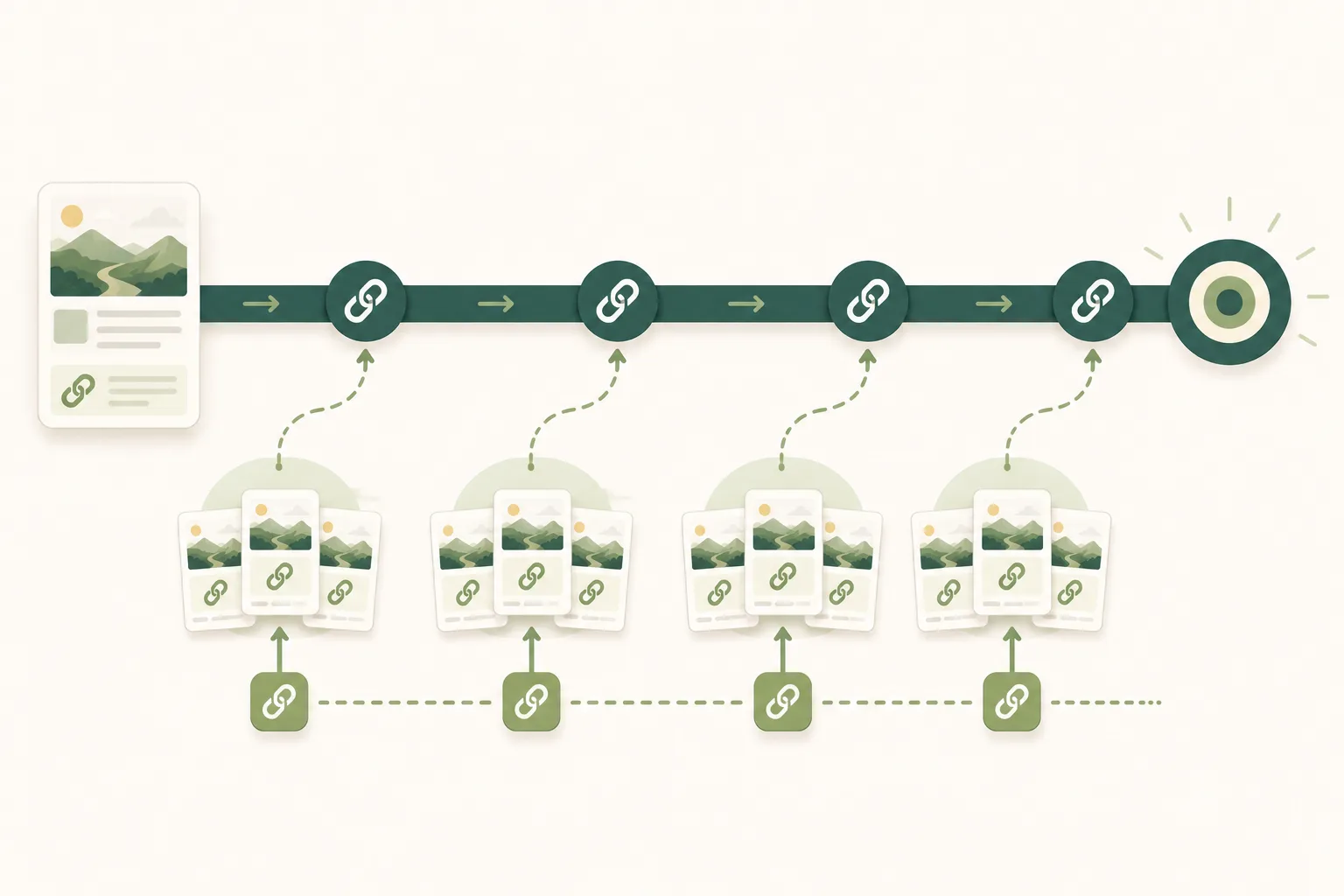
Start with 100 resource pages found through operators and competitor backlink analysis.
After removing abandoned pages: perhaps 45. This is the biggest single cut.
After removing pages with no traffic or excessive outbound counts: perhaps 25.
After removing pages where your asset genuinely does not fit: perhaps 15. Fifteen pitches. Acceptance on this tactic runs better than general outreach because the ask aligns with the page’s purpose, and placements tend to be durable — a curated list is maintained rather than forgotten, so the links survive longer than most. Time cost: an hour or two finding prospects, two to three hours qualifying honestly, two hours writing genuinely specific pitches. Comparable to broken link building, with a better hit rate and more durable results.
The variant that works better than pitching
Instead of asking to be added to an existing list, build the list. A genuinely comprehensive resource page in your niche — better organised, more current, and more complete than what exists — becomes the thing other people link to. It also gives you something to offer in every other tactic, because a resource page is exactly what other resource pages link to. This is slower and it is the higher-return move. It converts you from someone requesting inclusion into someone worth including, and it keeps earning without further work. Two things make it fail: building a list nobody needs because three good ones already exist, and building it without telling anyone. The second is more common.
Edge cases
Pages with submission forms. Many resource pages have a suggest-a-link form. Use it — it goes to whoever maintains the page, and it signals you read the instructions.
.edu resource pages. Frequently maintained by a named librarian or department. Higher value, and they respond to genuine academic or reference utility rather than commercial pitches. Do not approach them like a business. Paid inclusion. Some directories charge. That crosses into paid placement territory and should be assessed as such rather than as resource page outreach.
Pages that link to competitors but not you. The strongest prospects and the most delicate. Do not frame it as a comparison. Name what your page adds that the existing entries do not cover.
Nofollow lists. Still worth it if the page sends traffic. Referral visitors from a curated list are unusually well-qualified, since they arrived by choosing you from a shortlist.
Tracking what you get
Resource page links are among the more durable placements, but durable is not permanent. Pages get restructured, maintainers move on, and lists get pruned when they grow unwieldy. Log every placement with the date and check periodically, because a link that disappears from a curated list is exactly the kind you would not notice for a year. That monitoring problem applies to every link you build, and it is why acquisition figures overstate what you actually hold. Nobody checks by hand, which is why Linkexchange monitors placements continuously and surfaces a removal when it happens rather than at an audit next year.
One thing worth doing before any of this. The article above says plainly that resource pages will not link to a commercial page, and that the move is to have something referenceable and route authority internally from it to the pages you want ranking. That routing is where most sites lose the value. A guide earns a resource page listing, holds the authority, and passes none of it onward because nothing internal points from it to anywhere useful. The free internal linking tools cover exactly that — authority flow shows where earned authority lands and where it stops, money pages shows which commercial pages are receiving nothing, and the opportunities report lists the specific connections missing between them. Orphan pages, weak pages, dead ends, broken internal links and 404s, content gaps, and cluster analysis sit alongside it. Bulk fix commits the connections in one click on the paid tier. A resource page listing that reaches nothing is a placement you earned and did not collect on.